
Initial US Approval
- 20251
Indications
Non–small cell lung cancer (NSCLC)
- Adults with advanced, unresectable or metastatic NSCLC harboring a neuregulin 1 (NRG1) gene fusion with disease progression on or after prior systemic therapy1
Pancreatic adenocarcinoma
- Adults with advanced, unresectable, or metastatic pancreatic adenocarcinoma harboring an NRG1 gene fusion with disease progression on or after prior systemic therapy1
These indications are approved under accelerated approval based on overall response rate and duration of response. Continued approval for this indication may be contingent upon verification and description of clinical benefit in a confirmatory trial(s).1
Recommended Dose/Route
- Zenocutuzumab-zbco, 750 mg, intravenously (IV) every 2 weeks until disease progression or unacceptable toxicity occurs1
- Administer premedications (corticosteroid, antipyretic, H1 antihistamine) for each infusion to reduce the risk of infusion-related reactions.1
Dose Reductions for Adverse Reactions
- No dose reduction is recommended for zenocutuzumab-zbco. However, dose interruptions, infusion rate reductions, and therapy discontinuation may be considered for managing adverse events (AEs) as outlined in the prescribing information.1
Pivotal Study
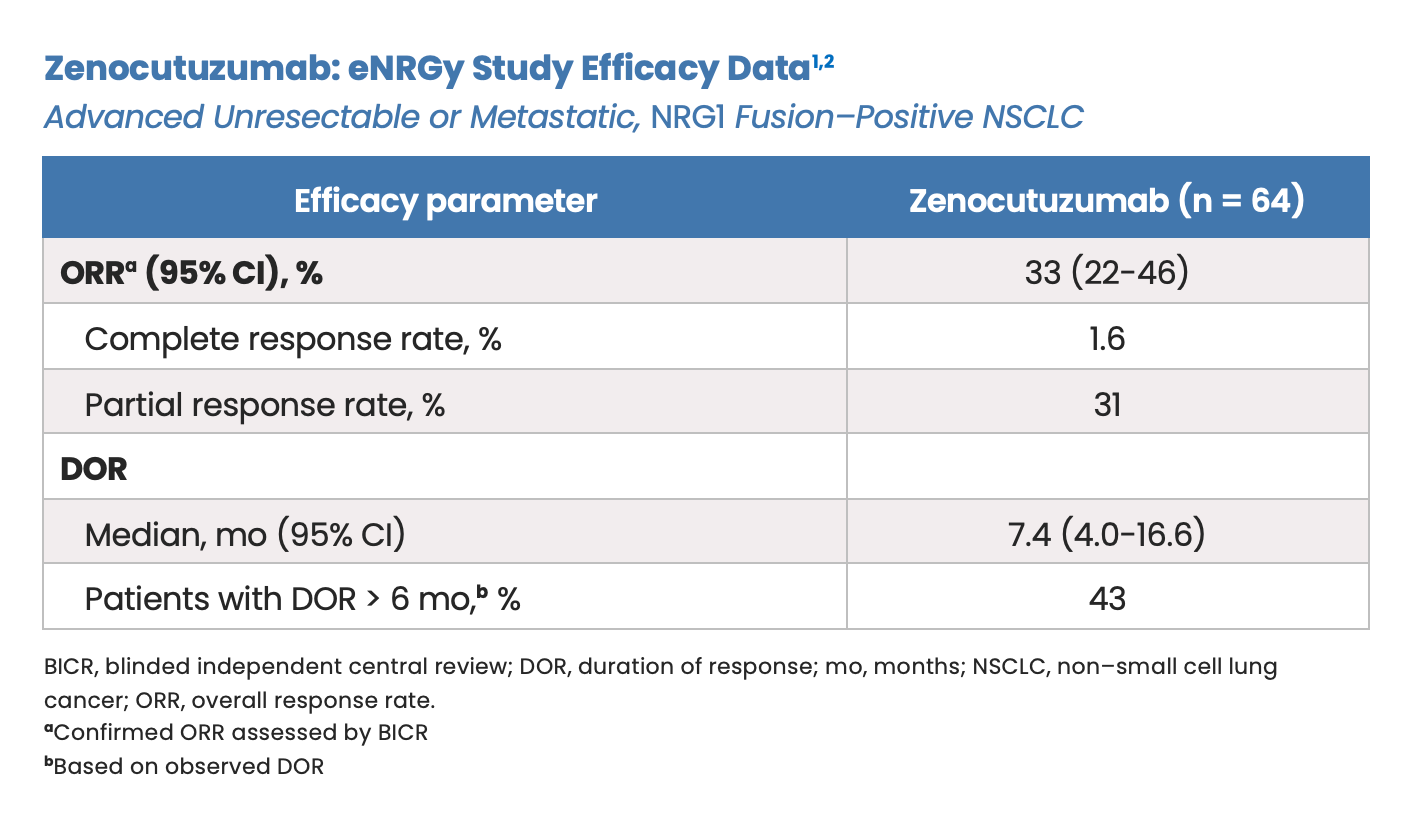
eNRGy (NCT02912949)1,2
- Key inclusion criteria: Patients 18 years or older with a locally advanced, unresectable, or metastatic solid tumor; NRG1-positive; previously treated with or unable to receive standard therapy; ECOG performance status, 0 to 2.
- Treatment: Zenocutuzumab-zbco, 750 mg, IV every 2 weeks until disease progression occurs.
Safety
eNRGy1,2
Advanced Unresectable or Metastatic, NRG1 Fusion–Positive NSCLC
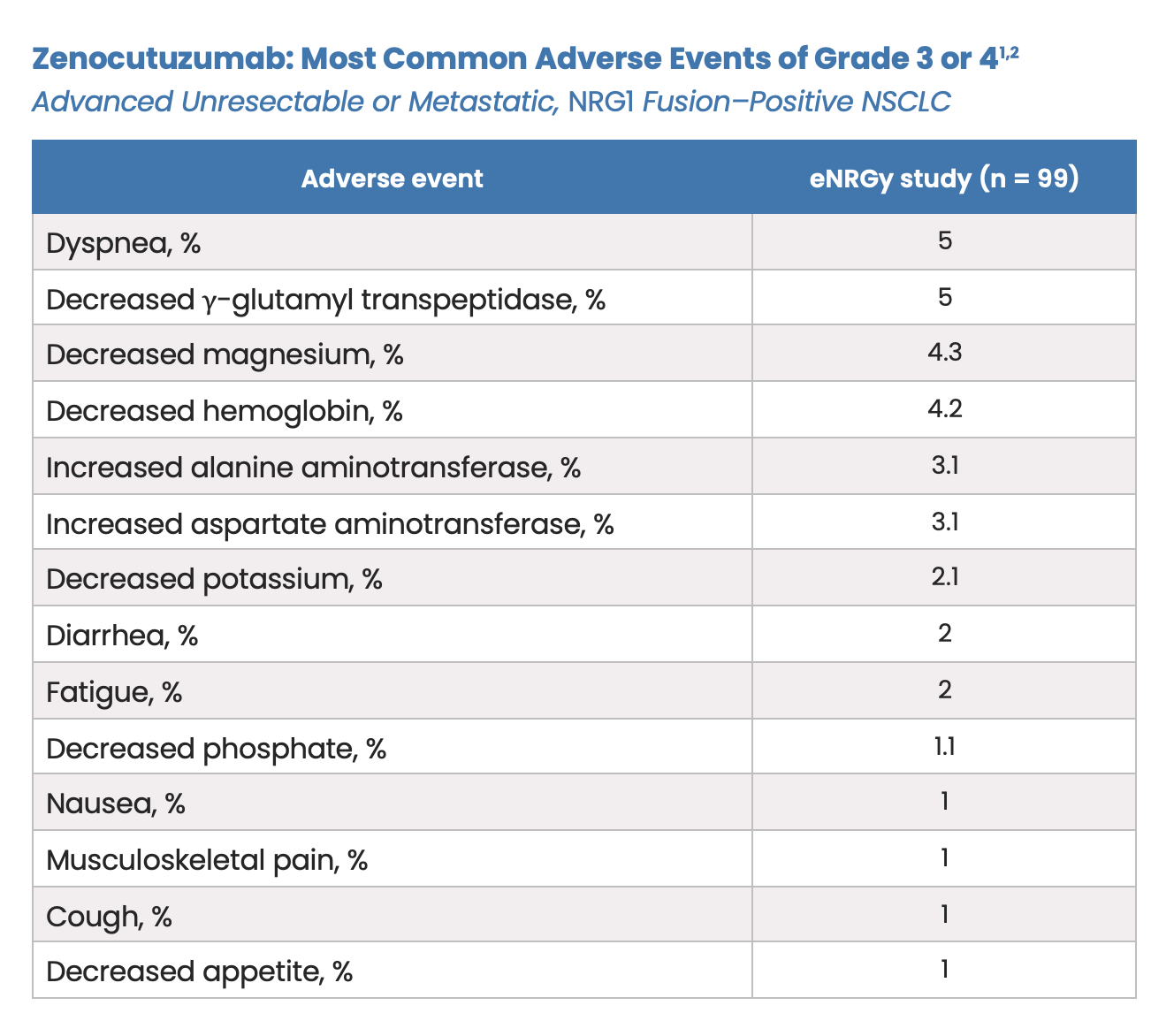
- Common adverse reactions (≥ 10%): The most frequently reported any-grade adverse events (AEs) were diarrhea (25%), musculoskeletal pain (23%), dyspnea (18%), fatigue (17%), cough (15%), rash (14%), infusion-related reactions (12%), edema (11%), decreased appetite (11%), and nausea (10%).
- Common laboratory abnormalities (≥ 20%): The most frequently reported any-grade laboratory abnormalities were increased decreased hemoglobin (35%), increased alanine aminotransferase (30%), decreased magnesium (28%), increased alkaline phosphatase (27%), decreased phosphate (26%), increased γ-glutamyl transpeptidase (23%), increased aspartate aminotransferase (22%), and decreased sodium (21%).
- Dosage interruption due to AEs: 29%
- Permanent discontinuation due to AEs: 3%
References
- Bizengri. Prescribing information. Partner Therapeutics, Inc; 2025. Accessed April 4, 2025. https://www.bizengri.com/pdf/pi.pdf
- Kim DW, Schram AM, Hollebecque A, et al. The phase I/II eNRGy trial: zenocutuzumab in patients with cancers harboring NRG1 gene fusions. Future Oncol. 2024;20(16):1057-1067. doi:10.2217/fon-2023-0824