
Initial US Approval
- 20241
Indications
- The treatment of adult patients with anaplastic lymphoma kinase (ALK)-positive (ALK+), locally advanced or metastatic non–small cell lung cancer (NSCLC) who have not previously received an ALK inhibitor.1
Recommended Dose/Route1
- Ensartinib, 225 mg, orally (PO) once daily with or without food until disease progression or unacceptable toxicity occurs.
- Assessment of liver function tests and fasting blood glucose is recommended before initiating ensartinib.
- Capsules should be swallowed whole and not crushed, chewed, opened, or dissolved.
Dose Reductions for Adverse Reactions1
- First reduction: Ensartinib, 200 mg, PO once daily
- Second reduction: Ensartinib, 150 mg, PO once daily
- Permanently discontinue if the patient is unable to tolerate 150 mg PO once daily.
- Once the dose has been reduced for adverse reactions, do not subsequently increase the dose of ensartinib.
Pivotal Study
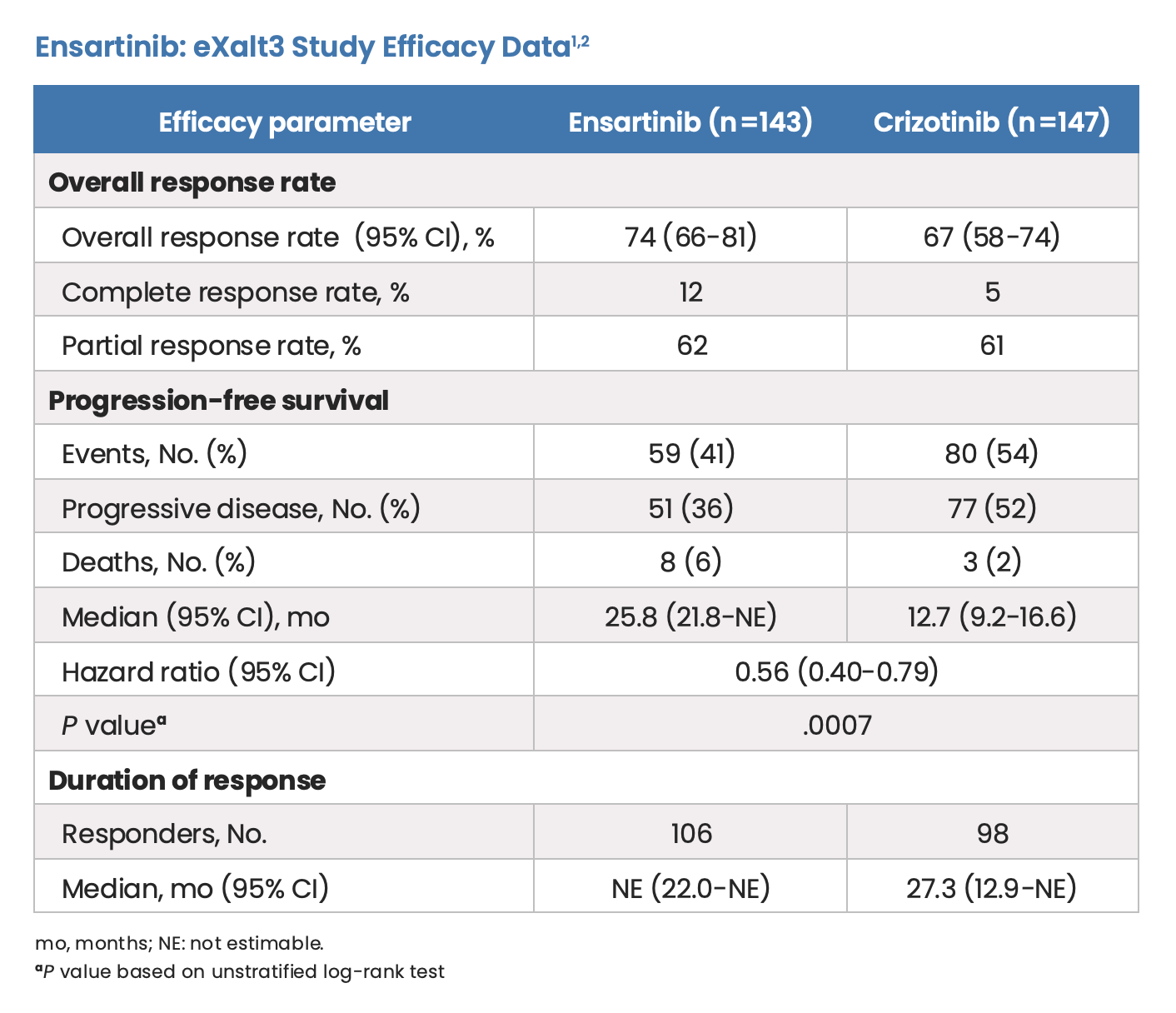
eXalt3 study (NCT02767804)1,2
- Key inclusion criteria: Adults 18 years or older with advanced or recurrent (stage IIIB not amenable for multimodality treatment) or metastatic NSCLC that was ALK+ as determined by local testing, with measurable disease per RECIST v1.1.
- Treatment: Ensartinib, 225 mg, PO once daily in 28-day cycles until disease progression, unacceptable toxic effects, or withdrawal of consent occurs.
Safety
eXalt3 Study (NCT02767804)1,2
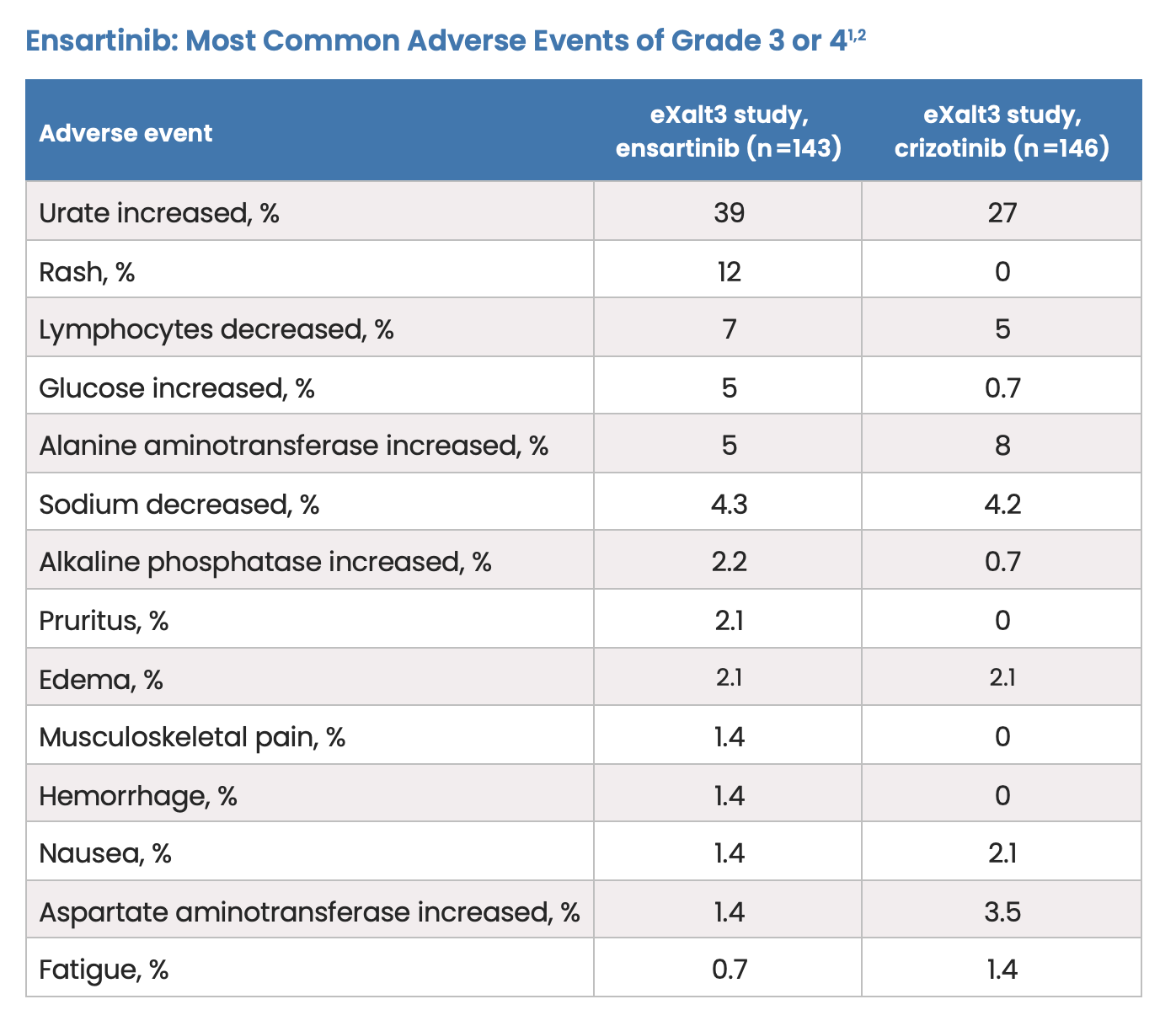
- Common adverse reactions (≥ 10): The most frequently reported any-grade adverse events (AEs) were rash (66%), musculoskeletal pain (36%), cough (31%), constipation (31%), pruritus (30%), edema (27%), pyrexia (22%), fatigue (21%), vomiting (16%), decreased appetite (15%), respiratory tract infection (13%), dizziness (12%), alopecia (11%), dry skin (10%), dysgeusia (10%), and hemorrhage (10%).
- Common laboratory abnormalities (≥20%): The most frequently reported any-grade laboratory abnormalities were increased alanine aminotransferase (73%), increased alkaline phosphatase (64%), increased aspartate aminotransferase (64%), decreased lymphocytes (57%), increased glucose (49%), decreased albumin (46%), decreased hemoglobin (43%), decreased phosphate (39%), increased urate (39%), increased creatinine (37%), decreased calcium (36%), and decreased sodium (27%).
- Dosage interruption due to AEs: 41%
- Dosage reductions due to AEs: 24%
- Permanent discontinuation due to AEs: 12%
References
- Ensacove. Prescribing information. Xcovery Holdings Inc; 2024. Accessed April 7, 2025. https://www.accessdata.fda.gov/drugsatfda_docs/label/2024/218171s000lbl.pdf
- Horn L, Wang Z, Wu G, et al. Ensartinib vs crizotinib for patients with anaplastic lymphoma kinase-positive non-small cell lung cancer: a randomized clinical trial. JAMA Oncol. 2021;7(11):1617-1625. doi:10.1001/jamaoncol.2021.3523