Brand: Rubraca
Initial US Approval
- 2016. mCRPC: accelerated approval in 2020; converted to regular approval December 17, 2025, based on TRITON3.1,2
Indications
BRCA-Mutated mCRPC:
- Adult patients with a deleterious BRCA mutation (germline and/or somatic)-associated metastatic castration-resistant prostate cancer who have been treated with androgen receptor-directed therapy. Prior taxane chemotherapy is no longer required.1
- Patient selection: deleterious BRCA mutation in plasma by FoundationOne Liquid CDx. A negative plasma result does not mean the tumor is negative for BRCA mutations.1,5
Recommended Dose/Route
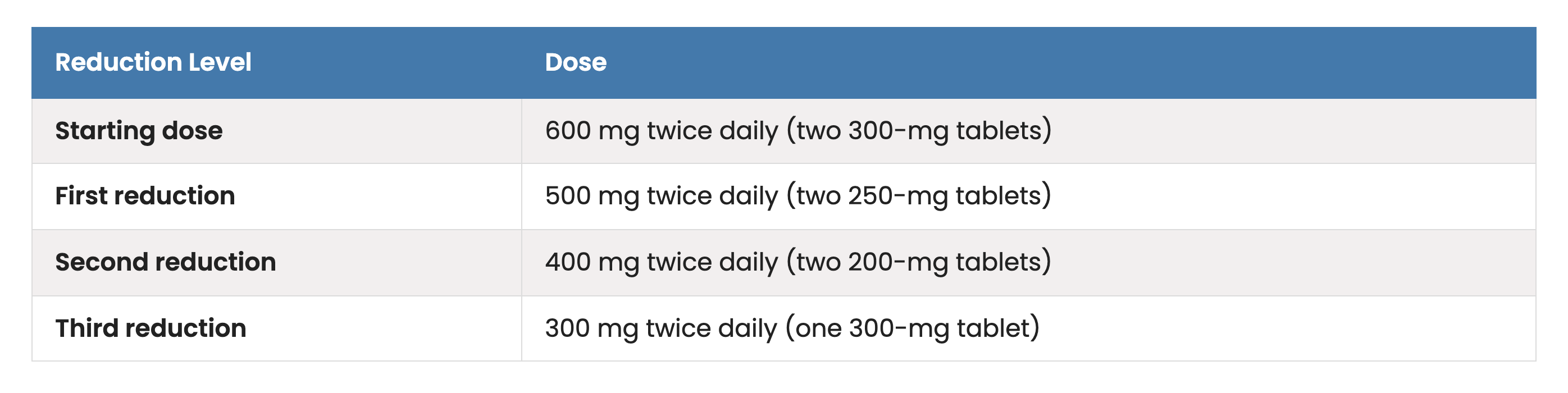
- 600 mg (two 300-mg tablets) orally twice daily, with or without food, until disease progression or unacceptable toxicity. Patients should also receive a GnRH analog concurrently or should have had bilateral orchiectomy.1
Dose Reductions for Adverse Reactions
Pivotal Study
TRITON3 (NCT02975934)
- Key Inclusion Criteria: mCRPC with a BRCA or ATM alteration progressing on 1 prior ARPI; no prior chemotherapy for castration-resistant disease (prior taxane for castration-sensitive disease allowed).1,3
- Treatment: randomized 2:1, open label, to rucaparib 600 mg twice daily (n=270) or physician's choice (n=135) of docetaxel or abiraterone/enzalutamide. BRCA subgroup: 201 vs 101.1,3
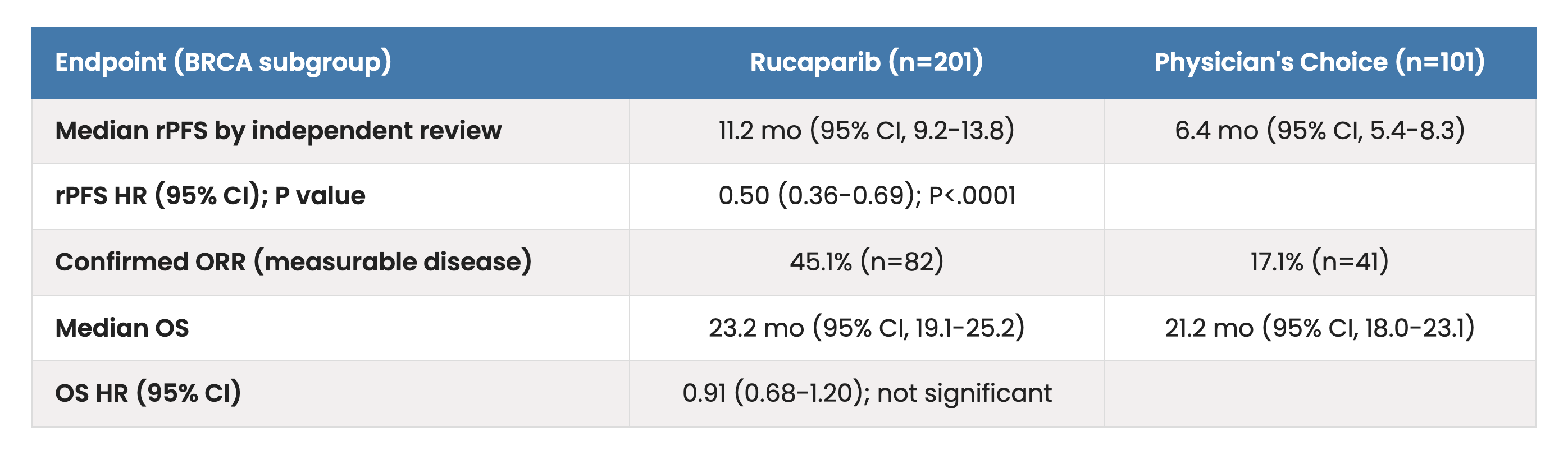
- Fair balance: overall survival was not improved; 52% of BRCA-mutated control patients crossed over. Exploratory benefit was driven by BRCA2 (rPFS HR, 0.46) and was not evident for BRCA1 (n=40; HR, 1.01) or ATM (HR, 0.95).1,3
- TRITON2 (NCT02952534): single-arm study supporting the 2020 accelerated approval (post-ARPI and taxane); confirmed ORR 44% (95% CI, 31-57) in 62 patients with measurable disease.1,4
Safety
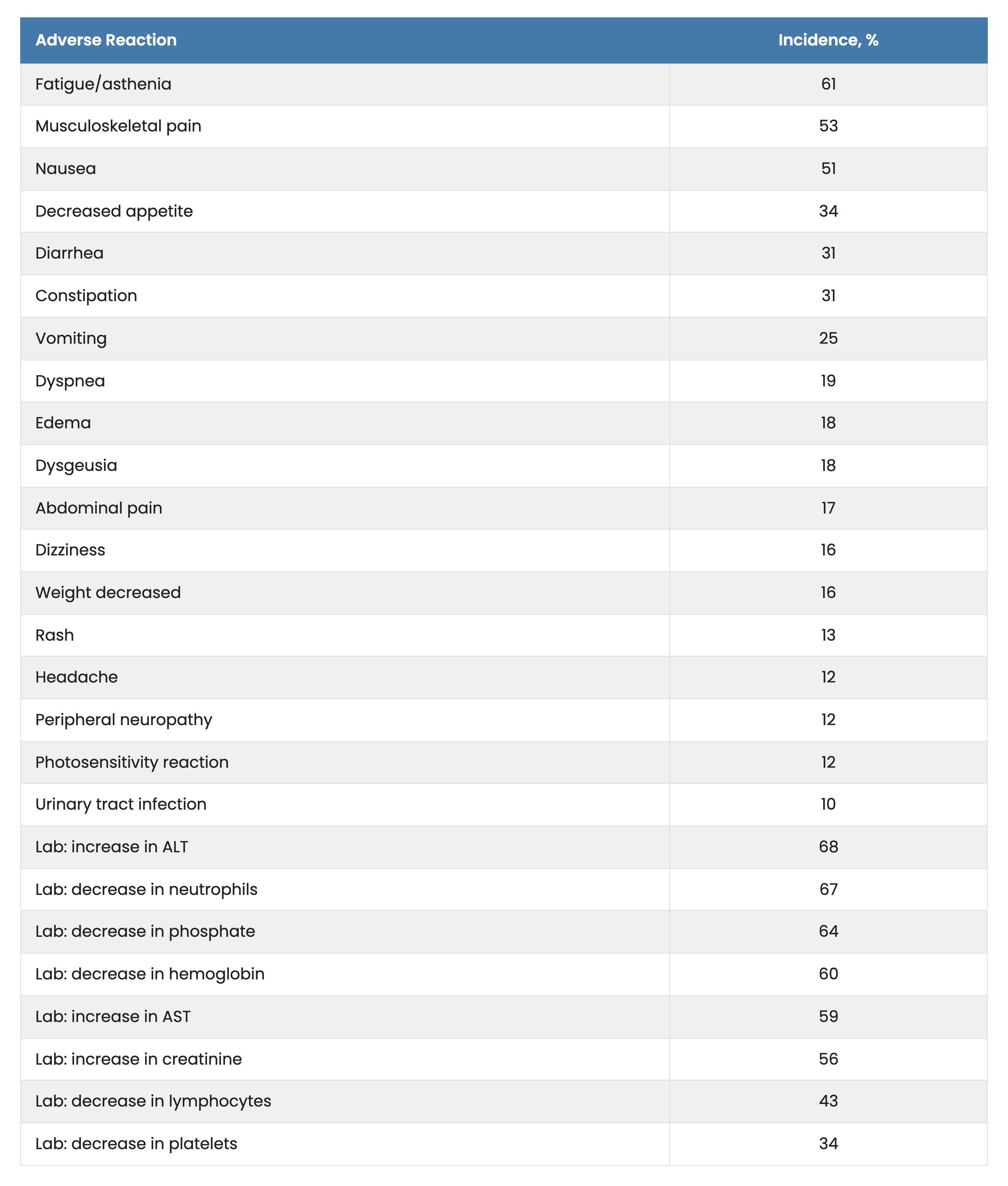
TRITON3, BRCA-Mutated (N=201)
- Summary: serious adverse reactions 27%, fatal 1.5%, discontinuation 14% (anemia 6%), dose reduction 36% (anemia 16%), dose interruption 53% (anemia 24%).1
- Key warnings: myelodysplastic syndrome/acute myeloid leukemia (1.6% of 2141 patients across ovarian and prostate studies; 1% in TRITON3); embryo-fetal toxicity. Monitor complete blood counts at baseline and monthly. Myelosuppression appears in the laboratory rows below; the label's adverse reaction table has no anemia row.1
References
- Rubraca (rucaparib) tablets. Prescribing information. pharmaand GmbH; revised 12/2025. Accessed October 2026.
- FDA grants regular approval to rucaparib for metastatic castration-resistant prostate cancer. US Food and Drug Administration. December 17, 2025.
- Fizazi K, Piulats JM, Reaume MN, et al. Rucaparib or physician's choice in metastatic prostate cancer. N Engl J Med. 2023;388(8):719-732. doi:10.1056/NEJMoa2214676
- Abida W, Patnaik A, Campbell D, et al. Rucaparib in men with metastatic castration-resistant prostate cancer harboring a BRCA1 or BRCA2 gene alteration. J Clin Oncol. 2020;38(32):3763-3772. doi:10.1200/JCO.20.01035
- List of cleared or approved companion diagnostic devices. US Food and Drug Administration. Accessed October 2026.