Brand: Padcev
Initial US Approval
- 2019 (accelerated, monotherapy). Regular approval and cisplatin-ineligible expansion July 9, 2021; with pembrolizumab for la/mUC December 15, 2023; MIBC cisplatin-ineligible November 21, 2025; MIBC regardless of cisplatin eligibility July 10, 2026.1,5,6,7
Indications
Muscle Invasive Bladder Cancer:
- In combination with pembrolizumab or pembrolizumab and berahyaluronidase alfa-pmph, as neoadjuvant treatment and then continued after cystectomy as adjuvant treatment, for adult patients with muscle invasive bladder cancer (MIBC).1
Locally Advanced or Metastatic Urothelial Cancer:
- In combination with pembrolizumab or pembrolizumab and berahyaluronidase alfa-pmph for adult patients with la/mUC.1
- As a single agent for adults with la/mUC who have received a PD-1 or PD-L1 inhibitor and platinum-containing chemotherapy, or who are cisplatin-ineligible and have received 1 or more prior lines of therapy.1
- Patient selection: no Nectin-4 or other biomarker testing is required.1
Recommended Dose/Route
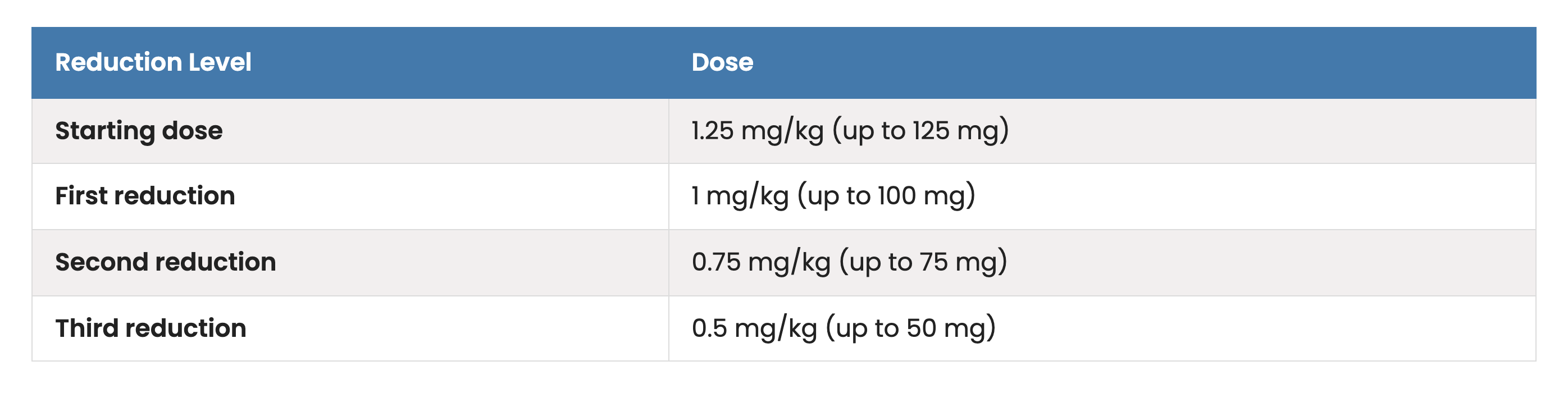
- 1.25 mg/kg (maximum 125 mg) IV over 30 minutes. With pembrolizumab: days 1 and 8 of each 21-day cycle (la/mUC until progression; MIBC cisplatin-ineligible, 3 neoadjuvant then 6 adjuvant cycles; MIBC cisplatin-eligible, 4 neoadjuvant then 5 adjuvant cycles). Monotherapy: days 1, 8, and 15 of each 28-day cycle. Give Padcev before pembrolizumab on the same day.1
Dose Reductions for Adverse Reactions
Pivotal Study
EV-302/KEYNOTE-A39 (NCT04223856)
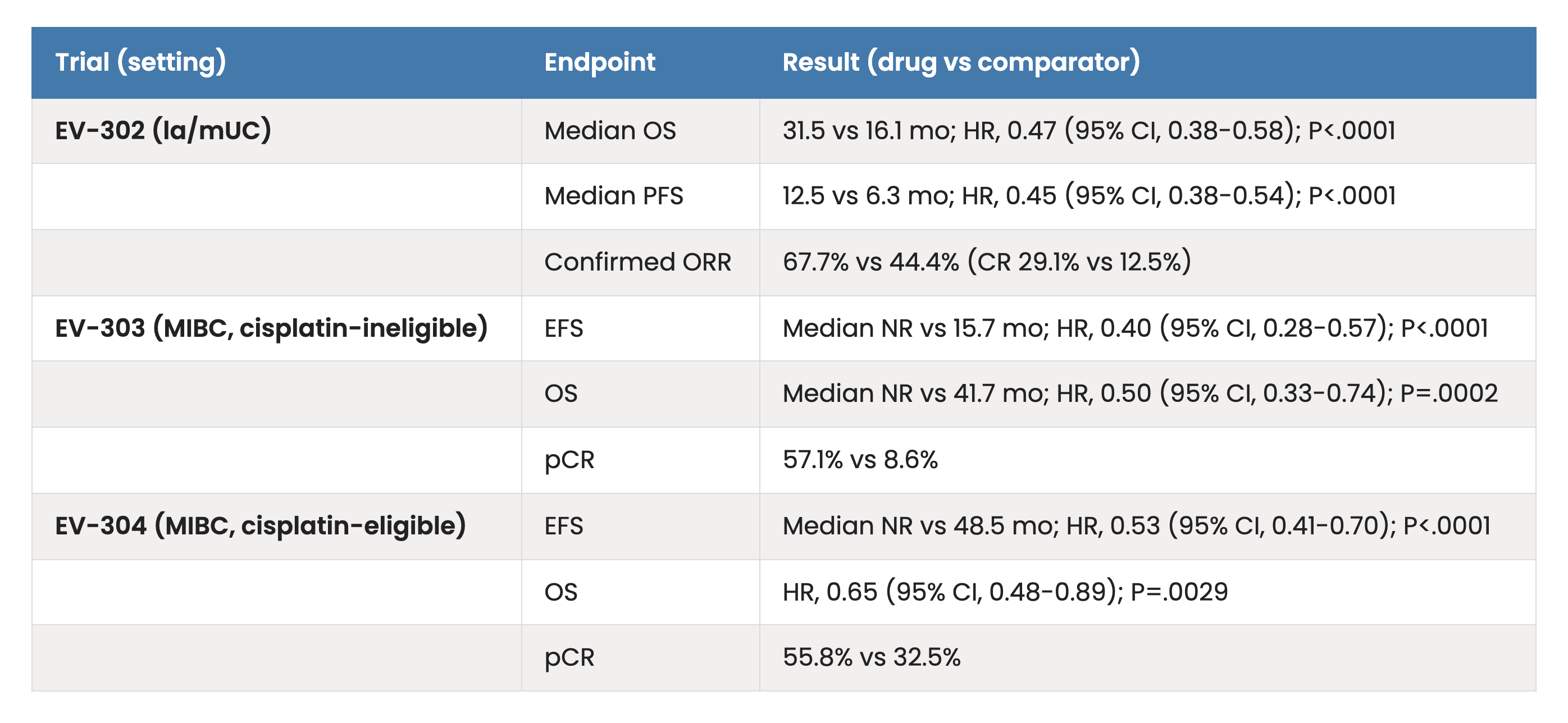
- Key Inclusion Criteria / Treatment: previously untreated la/mUC; randomized 1:1 to enfortumab vedotin plus pembrolizumab (n=442) or gemcitabine plus cisplatin or carboplatin (n=444).1,2
EV-303/KEYNOTE-905 (NCT03924895) and EV-304/KEYNOTE-B15 (NCT04700124)
- Key Inclusion Criteria / Treatment: MIBC eligible for cystectomy. EV-303 (cisplatin-ineligible or declining cisplatin): perioperative enfortumab vedotin plus pembrolizumab (n=170) vs cystectomy alone (n=174). EV-304 (cisplatin-eligible): perioperative enfortumab vedotin plus pembrolizumab (n=405) vs neoadjuvant gemcitabine-cisplatin (n=403).1,3,4
Safety
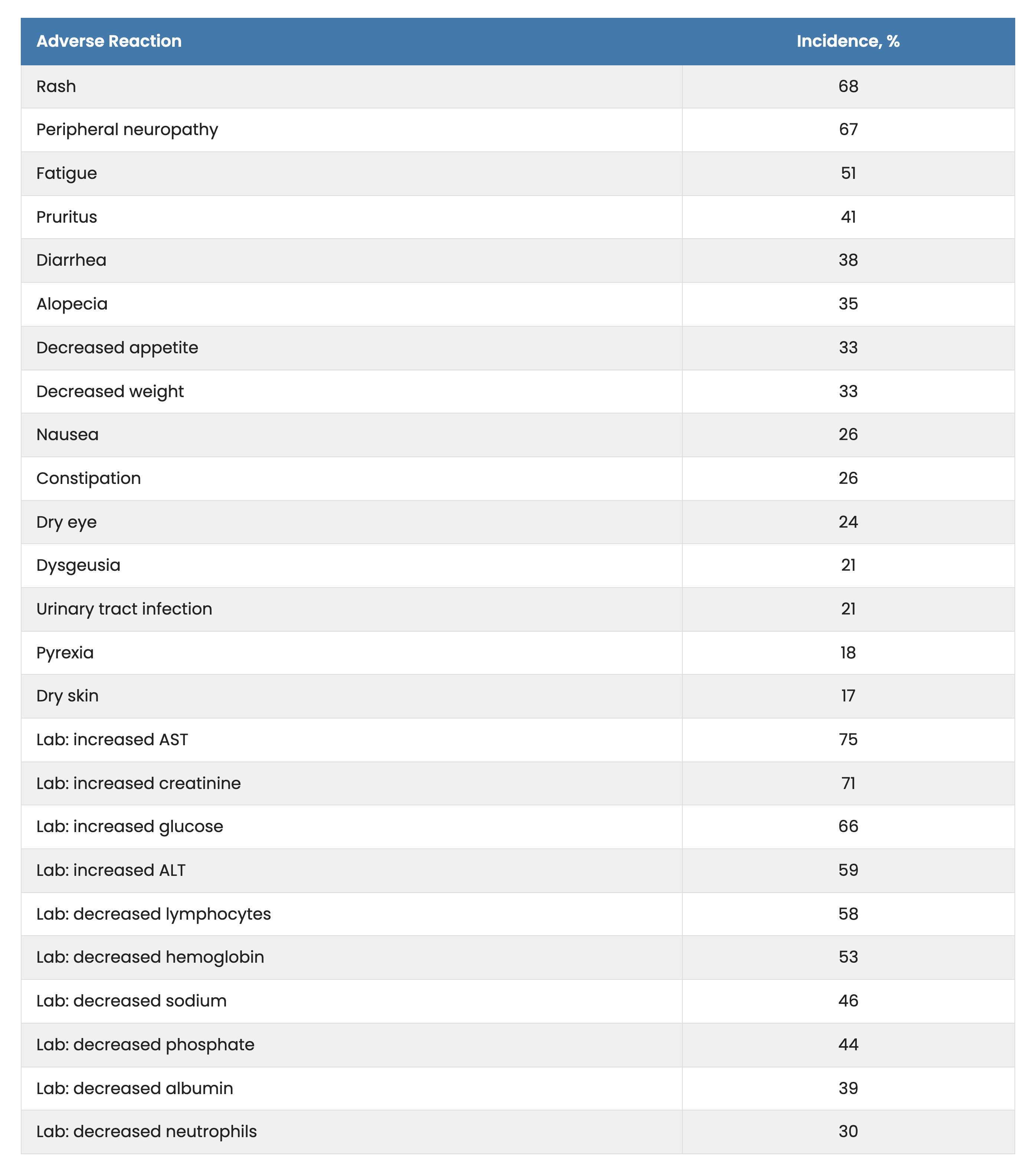
EV-302, Enfortumab Vedotin Plus Pembrolizumab (N=440)
- Summary: serious adverse reactions 50%, fatal 3.9%, discontinuation 35% (peripheral neuropathy 15%), dose reduction 42%, dose interruption 73%.1
- Key warnings: skin reactions (70% with pembrolizumab in la/mUC; grade 3 or 4, 17%); peripheral neuropathy (67%); pneumonitis/ILD (10%; fatal 0.4%); hyperglycemia, including fatal diabetic ketoacidosis; ocular disorders; infusion site extravasation; embryo-fetal toxicity.1
EV-303, Perioperative (N=167)
- Summary: neoadjuvant phase, serious adverse reactions 27%, fatal 1.2%, discontinuation 22%; adjuvant phase, serious 43%, fatal 8%, discontinuation 28%. An additional 2.7% died after surgery before adjuvant treatment.1
References
- Padcev (enfortumab vedotin-ejfv) for injection. Prescribing information. Astellas Pharma US, Inc; revised 07/2026. Accessed October 2026.
- Powles T, et al. Enfortumab vedotin and pembrolizumab in untreated advanced urothelial cancer. N Engl J Med. 2024;390(10):875-888. doi:10.1056/NEJMoa2312117
- Vulsteke C, Adra N, Danchaivijitr P, et al. Perioperative enfortumab vedotin and pembrolizumab in bladder cancer. N Engl J Med. 2026;394(13):1257-1269. doi:10.1056/NEJMoa2511674
- Galsky MD, Valderrama BP, Maruzzo M, et al. Enfortumab vedotin and pembrolizumab in cisplatin-eligible bladder cancer. N Engl J Med. 2026;395(4):338-348. doi:10.1056/NEJMoa2601486
- FDA approves enfortumab vedotin-ejfv with pembrolizumab for locally advanced or metastatic urothelial cancer. US Food and Drug Administration. December 15, 2023.
- FDA approves pembrolizumab with enfortumab vedotin-ejfv for muscle invasive bladder cancer. US Food and Drug Administration. November 21, 2025.
- FDA approves pembrolizumab or pembrolizumab and berahyaluronidase alfa-pmph, each with enfortumab vedotin-ejfv, for muscle invasive bladder cancer. US Food and Drug Administration. July 10, 2026.