Brand: Balversa
Initial US Approval
- 2019 (accelerated approval, BLC2001). Converted to regular approval January 19, 2024, based on THOR cohort 1; the indication was narrowed to FGFR3 alterations.1,4,5
Indications
FGFR3-Altered la/mUC:
- Adult patients with locally advanced or metastatic urothelial carcinoma with susceptible FGFR3 genetic alterations whose disease has progressed on or after at least 1 line of prior systemic therapy.1
- Limitation of use: not recommended for patients who are eligible for and have not received prior PD-1 or PD-L1 inhibitor therapy.1
- Patient selection: FDA-approved companion diagnostic, the therascreen FGFR RGQ RT-PCR Kit (FFPE tumor tissue).1,6
Recommended Dose/Route
- 8 mg orally once daily with or without food. Check serum phosphate 14 to 21 days after starting; increase to 9 mg once daily if phosphate is below 9.0 mg/dL and there are no ocular disorders or grade 2 or higher adverse reactions. Restrict dietary phosphate to 600 to 800 mg/day.1
Dose Reductions for Adverse Reactions
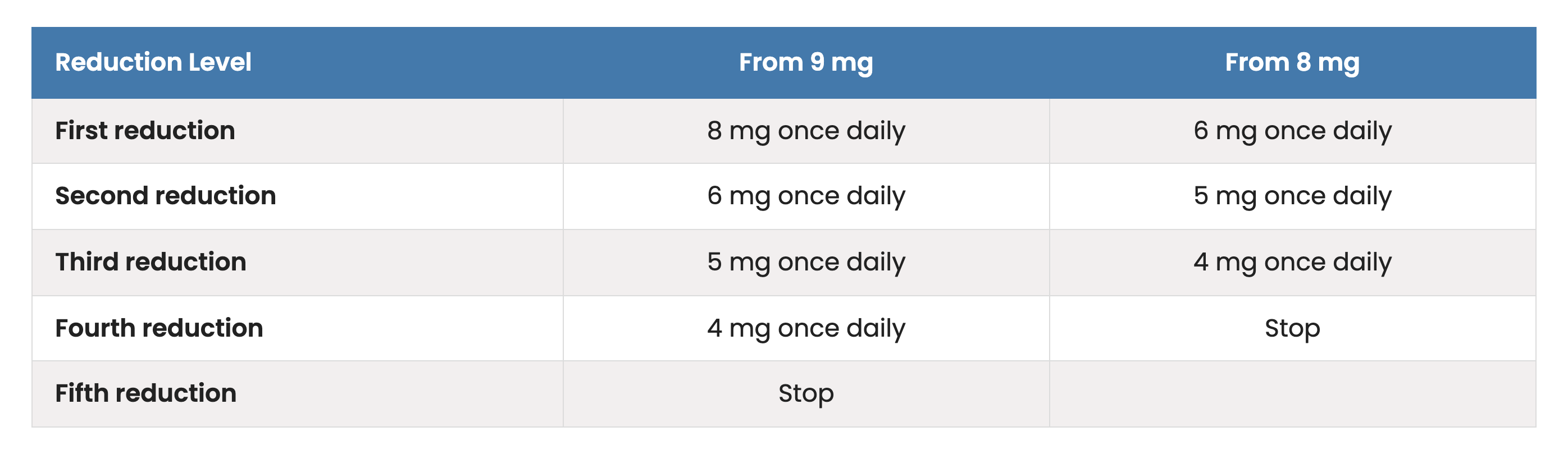
- Withhold for serum phosphate 9 mg/dL or higher; permanently discontinue if 10 mg/dL or higher persists beyond 2 weeks. Withhold for central serous retinopathy and obtain an ophthalmic exam within 2 weeks.1
Pivotal Study
THOR Cohort 1 (NCT03390504)
- Key Inclusion Criteria: la/mUC with select FGFR alterations progressing after 1 or 2 prior treatments including an anti-PD-(L)1 agent; ECOG 0 to 2; no prior FGFR inhibitor.1,2
- Treatment: randomized 1:1, open label, erdafitinib 8 mg with uptitration to 9 mg (n=136) vs investigator's choice of docetaxel or vinflunine (n=130). 33% had upper tract primaries; 88% had prior platinum.1
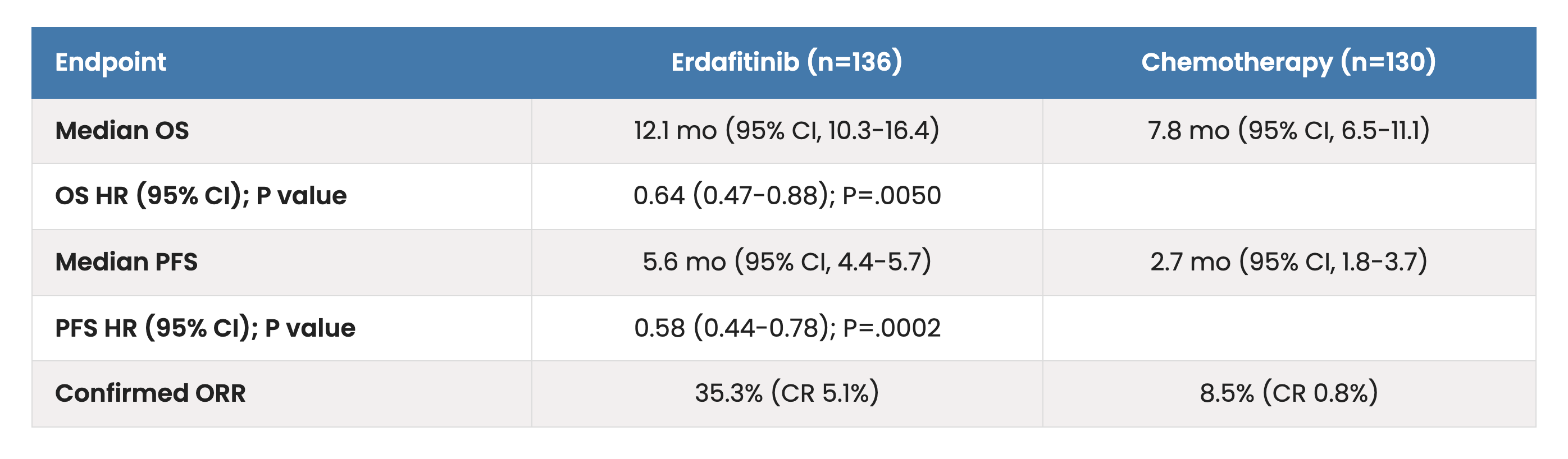
- Fair balance: in THOR cohort 2 (PD-(L)1-naive patients with 1 prior line), erdafitinib was not superior to pembrolizumab for OS (10.9 vs 11.1 months; HR, 1.18; 95% CI, 0.92-1.51; P=.18), which underlies the limitation of use. In BLC2001, no responses occurred among 6 patients with FGFR2 fusions.1,3,7
Safety
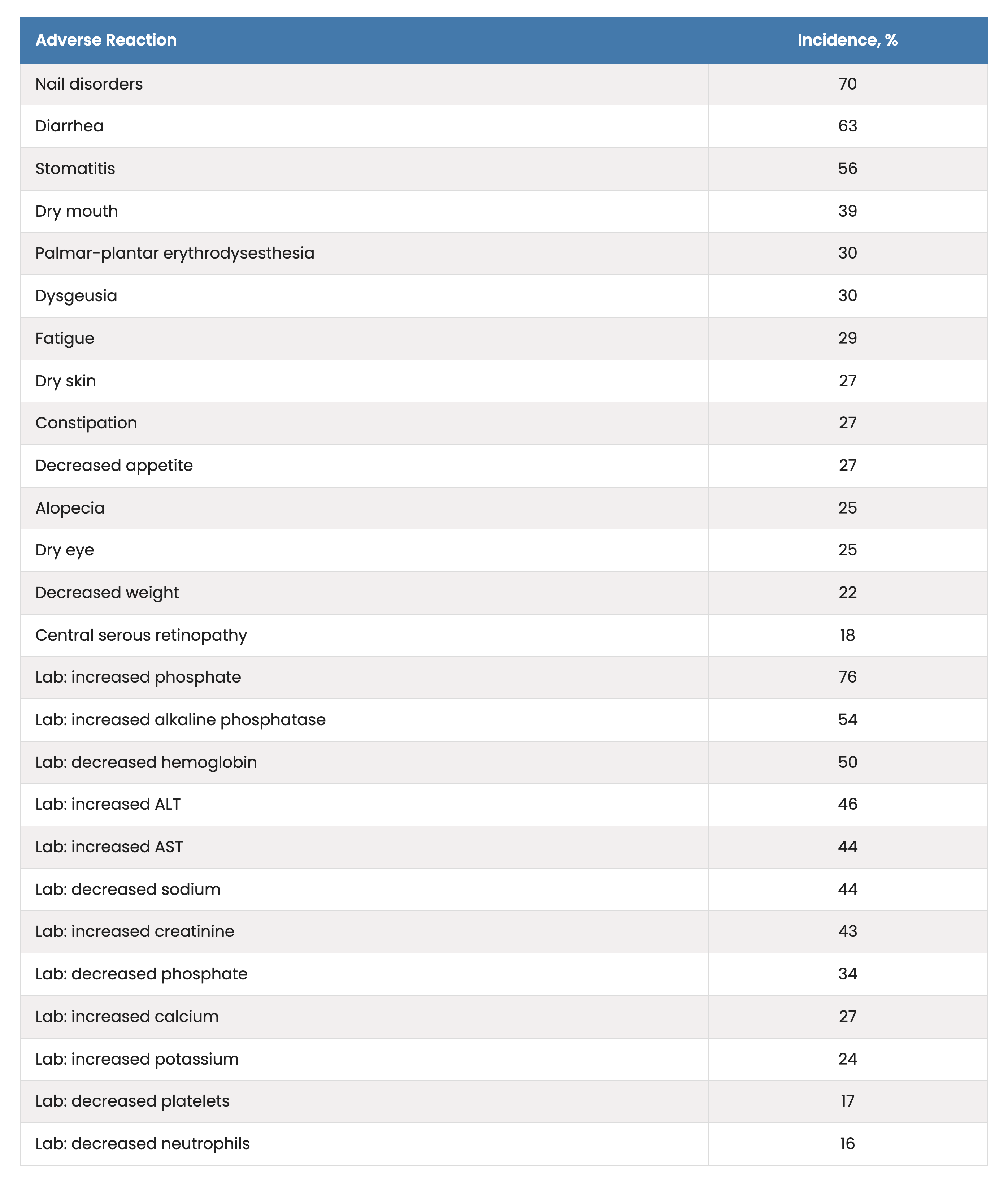
THOR Cohort 1 (N=135)
- Summary: serious adverse reactions 41%, fatal 4.4%, discontinuation 14% (mainly nail and eye disorders), dose reduction 69%, dose interruption 72%.1
- Key warnings: ocular disorders (central serous retinopathy/retinal pigment epithelial detachment in 22% across studies; dry eye 26%), requiring monthly eye exams for 4 months then every 3 months; hyperphosphatemia and soft tissue mineralization (increased phosphate 73%); embryo-fetal toxicity.1
References
- Balversa (erdafitinib) tablets. Prescribing information. Janssen Products, LP; revised 10/2025. Accessed October 2026.
- Loriot Y, Matsubara N, Park SH, et al. Erdafitinib or chemotherapy in advanced or metastatic urothelial carcinoma. N Engl J Med. 2023;389(21):1961-1971. doi:10.1056/NEJMoa2308849
- Siefker-Radtke AO, Matsubara N, Park SH, et al. Erdafitinib versus pembrolizumab in pretreated patients with advanced or metastatic urothelial cancer with select FGFR alterations: cohort 2 of the randomized phase III THOR trial. Ann Oncol. 2024;35(1):107-117. doi:10.1016/j.annonc.2023.10.003
- Loriot Y, Necchi A, Park SH, et al. Erdafitinib in locally advanced or metastatic urothelial carcinoma. N Engl J Med. 2019;381(4):338-348. doi:10.1056/NEJMoa1817323
- FDA approves erdafitinib for locally advanced or metastatic urothelial carcinoma. US Food and Drug Administration. January 19, 2024.
- therascreen FGFR RGQ RT-PCR Kit. Premarket approval P180043. US Food and Drug Administration. Accessed October 2026.
- Maguire WF, Chang E, Mulkey F, et al. FDA approval summary: erdafitinib for FGFR3-altered locally advanced or metastatic urothelial carcinoma. Clin Cancer Res. Published online August 12, 2026. doi:10.1158/1078-0432.CCR-26-1154