Brand: Tecentriq
Initial US Approval
- 2016. Adjuvant ctDNA MRD-positive MIBC indication approved May 15, 2026. Earlier metastatic urothelial indications were voluntarily withdrawn in 2021 (post-platinum) and 2022 (cisplatin-ineligible).1,2,3
Indications
Adjuvant ctDNA MRD-Positive MIBC:
- As a single agent for adjuvant treatment of adult patients with muscle invasive bladder cancer (MIBC) after cystectomy who have circulating tumor DNA molecular residual disease (ctDNA MRD) as determined by an FDA-authorized test.1
- Patient selection: ctDNA MRD detected in plasma by serial testing between 6 weeks and 1 year after cystectomy using Signatera CDx.1,2
Recommended Dose/Route
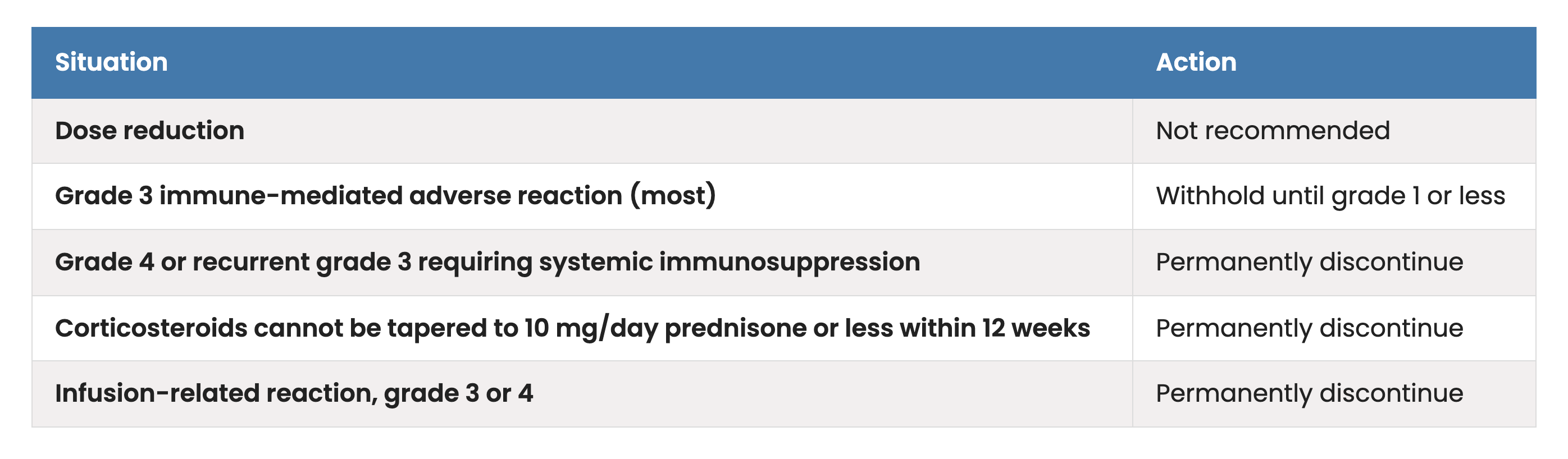
- 840 mg IV every 2 weeks, 1200 mg every 3 weeks, or 1680 mg every 4 weeks for up to 1 year, unless disease recurrence or unacceptable toxicity. Subcutaneous Tecentriq Hybreza (1875 mg atezolizumab/30,000 units hyaluronidase every 3 weeks) is also approved for this indication.1,2
Dosage Modification
Pivotal Study
IMvigor011 (NCT04660344)
- Key Inclusion Criteria: (y)pT2-T4aN0M0 or (y)pT0-T4aN+M0 MIBC after radical cystectomy with lymph node dissection; ECOG 0 to 2; radiographically disease-free; enrolled 6 to 24 weeks after cystectomy regardless of prior neoadjuvant chemotherapy; randomized once ctDNA-positive during surveillance.2,4
- Treatment: randomized 2:1, double blind, atezolizumab 1680 mg (n=167) vs placebo (n=83) every 4 weeks for up to 1 year.2,4
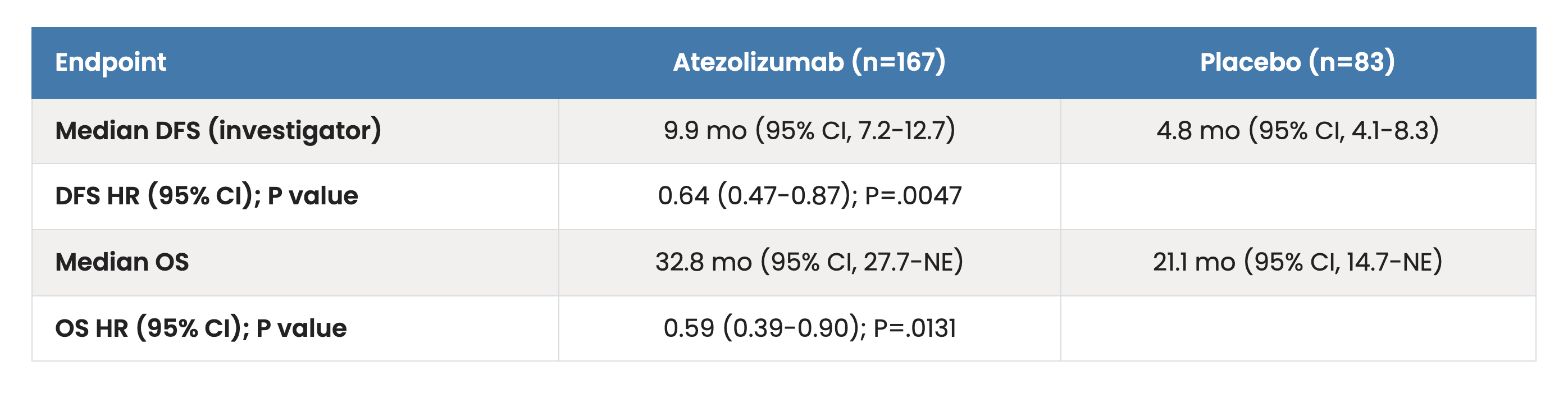
- Fair balance: median disease-free survival was 9.9 months with atezolizumab, so many ctDNA-positive patients still recurred within the first year.2
Safety
IMvigor011 (N=165)
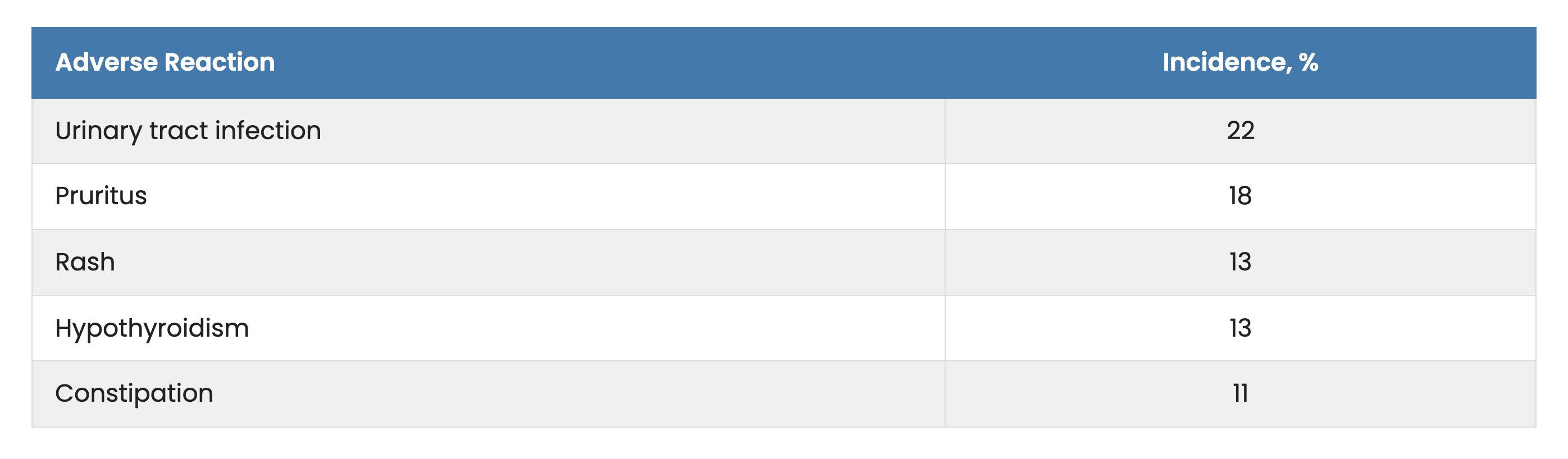
- Summary: serious adverse reactions 27% (urinary tract infection 9%), fatal 3%, discontinuation 9% (pneumonitis 1.8%), dose interruption 24%.5
- Key warnings: severe and fatal immune-mediated adverse reactions (any grade 39% vs 12% with placebo; grade 3 or 4, 5%), including pneumonitis, colitis, hepatitis, endocrinopathies, nephritis, and dermatologic reactions; infusion-related reactions; complications of allogeneic HSCT; embryo-fetal toxicity.1,5
References
- Tecentriq (atezolizumab) injection. Prescribing information. Genentech, Inc; revised 05/2026. Accessed October 2026.
- FDA approves atezolizumab for adjuvant treatment of muscle invasive bladder cancer in patients with molecular residual disease. US Food and Drug Administration. May 15, 2026.
- Genentech. Important prescribing information: withdrawal of Tecentriq urothelial carcinoma indication. Dear Health Care Provider letter. November 2022.
- Powles T, Kann AG, Castellano D, et al. ctDNA-guided adjuvant atezolizumab in muscle-invasive bladder cancer. N Engl J Med. 2025;393(24):2395-2408. doi:10.1056/NEJMoa2511885
- Genentech. Tecentriq IMvigor011 safety profile. tecentriq-hcp.com. Accessed October 2026.