
Initial US Approval
- 2014 (nivolumab); 2011 (ipilimumab)1,2
Indications
- Nivolumab (nivo) as a single agent or in combination with ipilimumab (ipi) is approved for the treatment of adult and pediatric (12 years and older) patients with microsatellite instability-high (MSI-H) or mismatch repair deficient (dMMR) metastatic colorectal cancer that has progressed following treatment with a fluoropyrimidine, oxaliplatin, and irinotecan. (Abbreviated indication, see full prescribing information for other indications).1
- This indication is approved under accelerated approval based on overall response rate (ORR) and duration of response (DOR). Continued approval for this indication may be contingent upon verification and description of clinical benefit in confirmatory trials.1
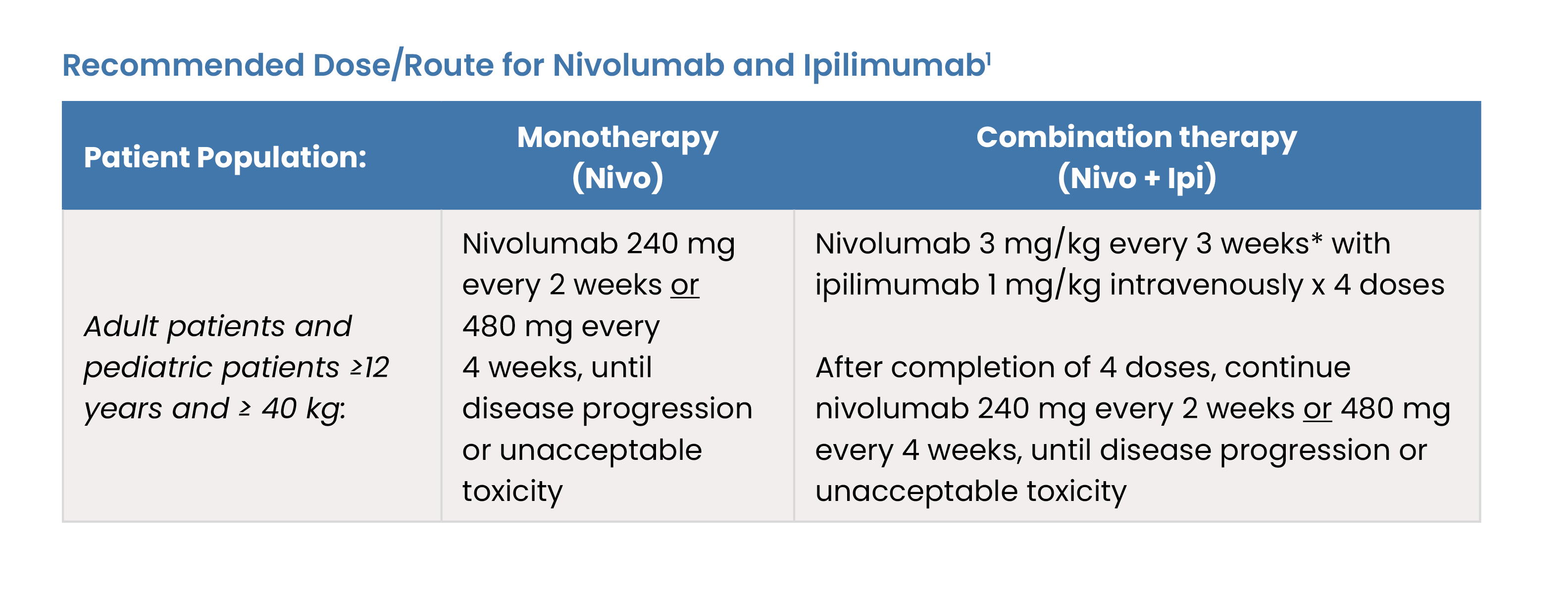
Dose Reductions for Adverse Reactions
No dose reductions are recommended. Withhold or discontinue nivolumab and ipilimumab to manage adverse reactions.1
Pivotal Studies
- CHECKMATE-142 (NCT02060188)3
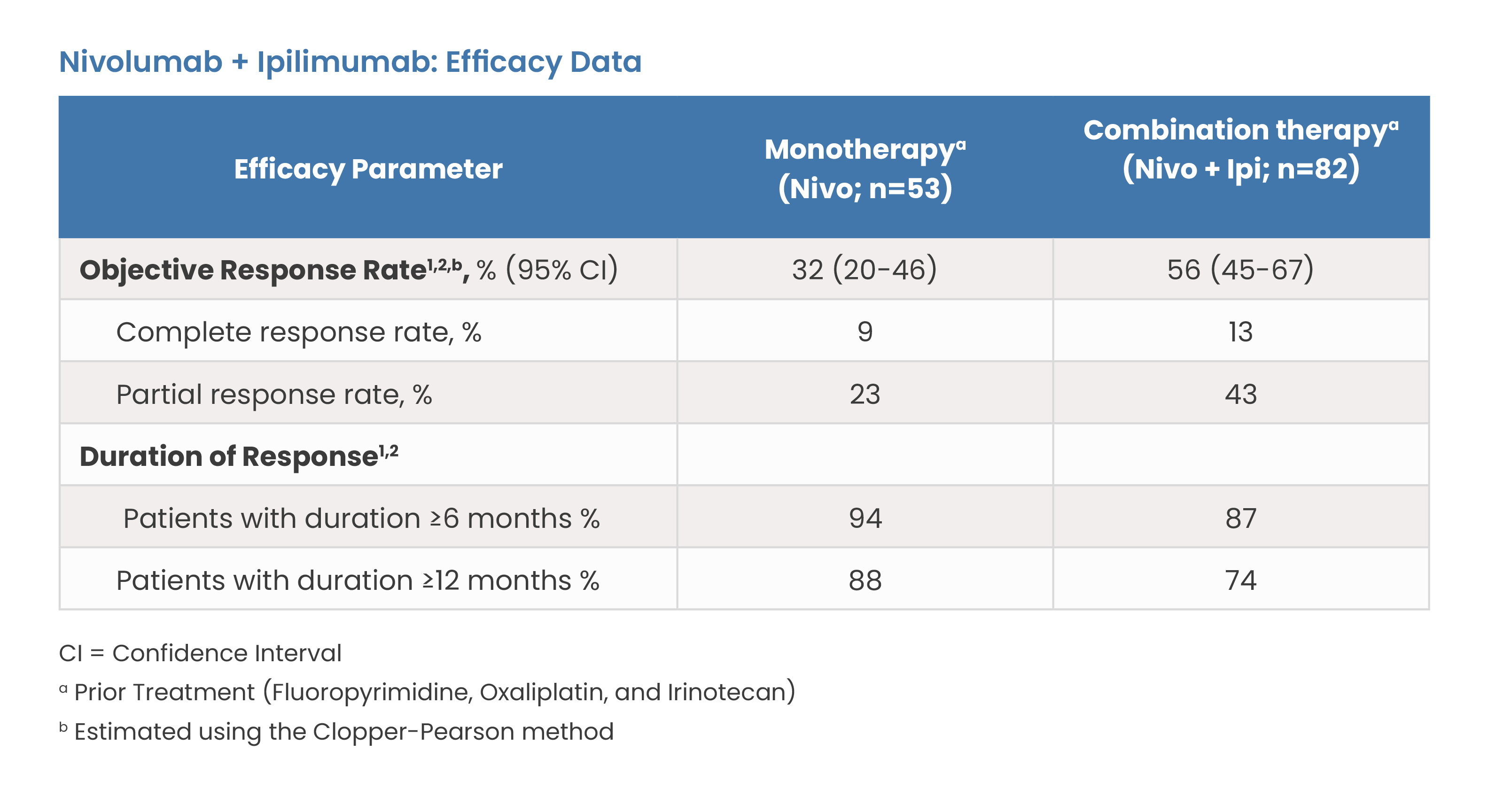
- Key Inclusion Criteria: Eligible patients had locally determined dMMR or MSI-H metastatic CRC (mCRC) with disease progression during or after prior treatment with fluoropyrimidine-, oxaliplatin-, or irinotecan-based chemotherapy and an Eastern Cooperative Oncology Group (ECOG) performance status of 0 or 1.1,2
- Treatment: Nivolumab 3 mg/kg and ipilimumab 1 mg/kg intravenously every 3 weeks for 4 doses, followed by nivolumab as a single agent at a dose of 3 mg/kg as intravenous infusion every 2 weeks.1,2
Safety
- The most common any grade adverse reactions in patients receiving nivolumab in combination with ipilimumab included fatigue (49%), diarrhea (45%), pyrexia (36%), musculoskeletal pain (36%), abdominal pain (30%), pruritus (28%), nausea (26%), rash (25%), vomiting (20%), and decreased appetite (20%). The most frequently reported any grade lab abnormalities included anemia (42%), increased AST (40%), increased lipase (39%), increased amylase (36%), increased ALT (33%), increased alkaline phosphatase (28%), thrombocytopenia (26%), and hyponatremia (26%).1
- Permanent Discontinuation Due to AEs: 13%3,4
References
- OPDIVO (Nivolumab). Prescribing information. Princeton, NJ, USA: Bristol-Myers Squibb Company; 2024. https://packageinserts.bms.com/pi/pi_opdivo.pdf
- YERVOY (Ipilimumab). Prescribing information. Princeton, NJ, USA: Bristol-Myers Squibb Company; 2/2023. https://packageinserts.bms.com/pi/pi_yervoy.pdf
- Lenz HJ, Van Cutsem E, Luisa Limon M, et al. First-line nivolumab plus low-dose ipilimumab for microsatellite instability-high/mismatch repair-deficient metastatic colorectal cancer: the phase II CheckMate 142 study. J Clin Oncol. 2022;40(2):161-170. doi: 10.1200/JCO.21.01015.
- Overman MJ, Lonardi S, Wong KYM, et al. Durable clinical benefit with nivolumab plus ipilimumab in DNA mismatch repair-deficient/microsatellite instability-high metastatic colorectal cancer. J Clin Oncol. 2018;36(8):773-779. doi: 10.1200/JCO.2017.76.9901.