
Initial US Approval
- 20201
Indications
HER2+ mBC:
- Approved in combination with trastuzumab and capecitabine for treatment of adult patients with advanced unresectable or metastatic HER2-positive breast cancer, including patients with brain metastases, who have received one or more prior anti-HER2-based regimens in the metastatic setting.1
HER2+ mCRC (in Combination with Trastuzumab):
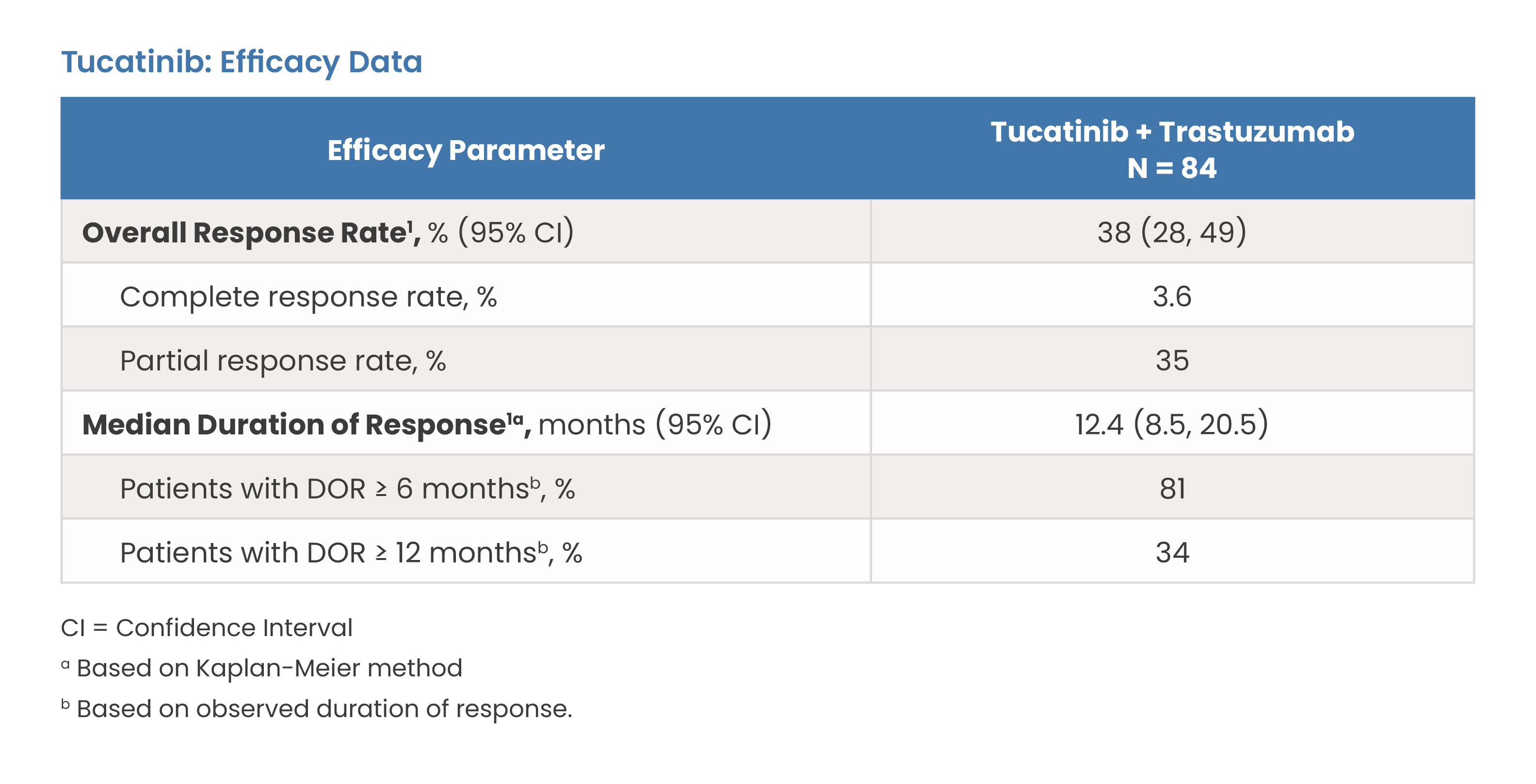
- Approved in combination with trastuzumab for the treatment of adult patients with RAS wild-type HER2-positive unresectable or metastatic colorectal cancer that has progressed following treatment with fluoropyrimidine-, oxaliplatin-, and irinotecan-based chemotherapy. This indication is approved under accelerated approval based on tumor response rate and durability of response. Continued approval for this indication may be contingent upon verification and description of clinical benefit in confirmatory trials.1
Recommended Dose/Route
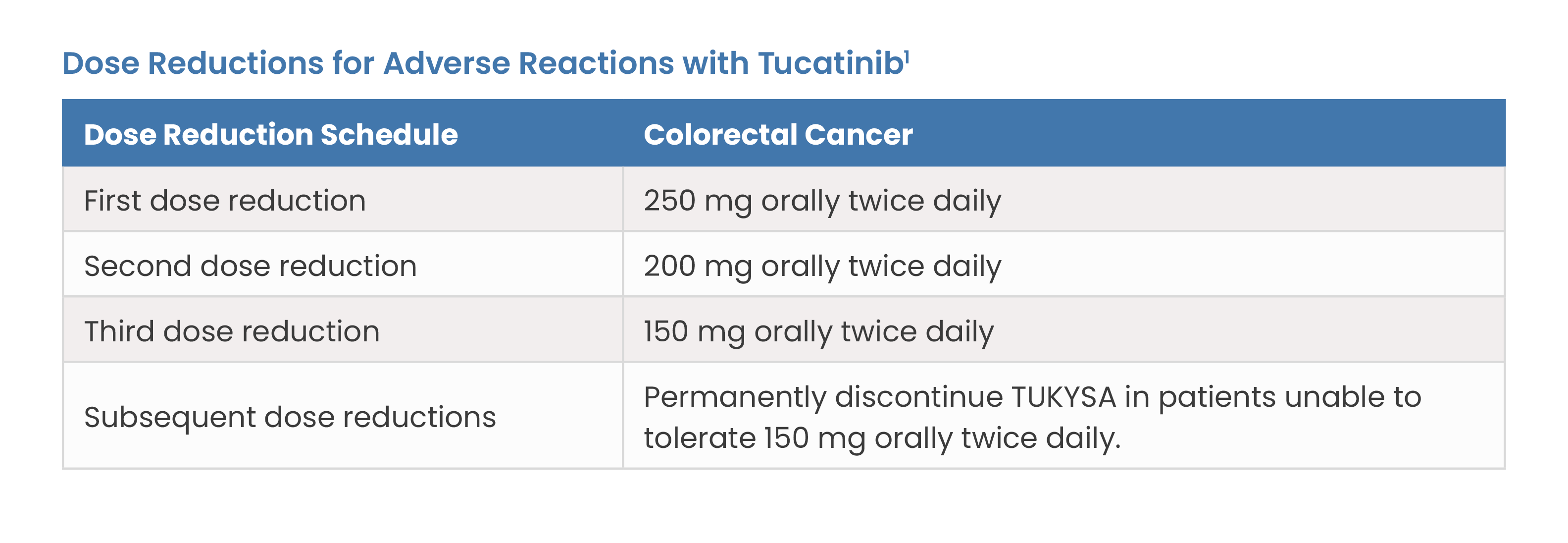
- The recommended dosage of tucatinib in HER2+ metastatic CRC is 300 mg taken orally twice daily in combination with trastuzumab.1
Pivotal Study
MOUNTAINEER (NCT03043313)2
- Key Inclusion Criteria: Eligible patients were required to have HER2-positive, RAS wild-type, unresectable or metastatic CRC and prior treatment with fluoropyrimidines, oxaliplatin, irinotecan, and antivascular endothelial growth factor (VEGF) monoclonal antibody (mAb). Patients whose disease had deficient mismatch repair (dMMR) proteins or microsatellite instability-high (MSI-H) must have also received an anti-programmed cell death protein-1 (PD-1) mAb.1
- Treatment: Tucatinib 300 mg orally twice per day with a loading dose of trastuzumab 8 mg/kg intravenously on Day 1 of Cycle 1, followed by a maintenance dose of trastuzumab 6 mg/kg on Day 1 of each subsequent 21-day cycle. Patients were treated until disease progression or unacceptable toxicity.1
Safety
MOUNTAINEER2
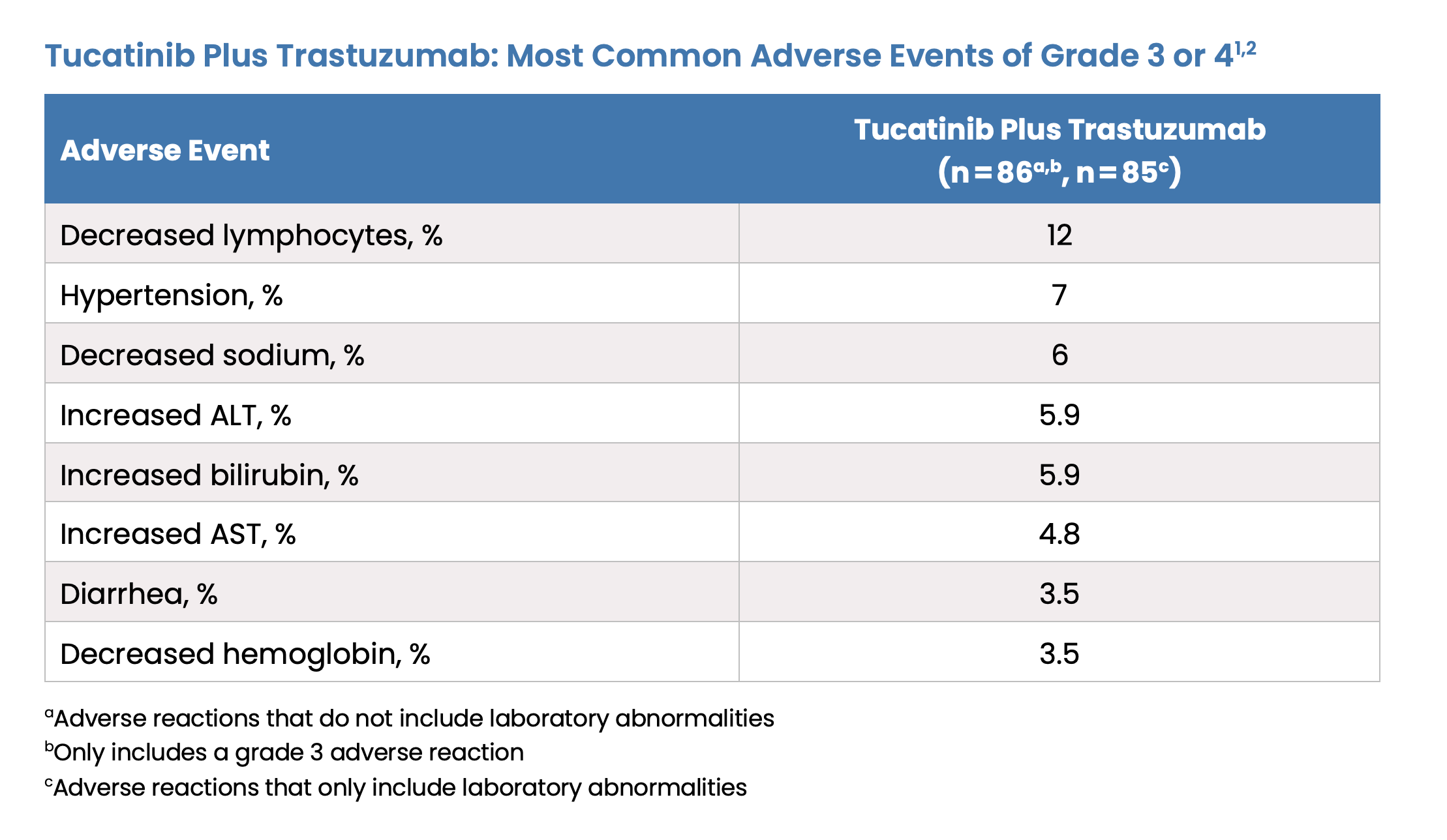
- Common Adverse Reactions (≥20%): The most frequently reported any grade adverse events (AEs) were diarrhea (64%), fatigue (44%), rash (37%), nausea (35%), abdominal pain (21%), infusion related reactions (21%), and pyrexia (20%).
- Common Laboratory Abnormalities (≥20%): The most frequently reported any grade laboratory abnormalities were increased creatinine (58%), increased glucose (56%), increased ALT (46%), decreased hemoglobin (46%), increased AST (33%), increased bilirubin (28%), increased alkaline phosphatase (25%), decreased lymphocytes (39%), decreased albumin (24%), decreased leukocytes (22%), and decreased sodium (24%).1
- Dosage Interruption Due to Adverse Events (AEs): 23%1
- Dosage Reductions Due to AEs: 9%1
- Permanent Discontinuation Due to AEs: 6%1
References
- TUKYSA (tucatinib). Prescribing information. Bothell, WA, USA: Seagen Inc., 2023. https://docs.seagen.com/TUKYSA_Full_Ltr_Master.pdf
- Strickler JH, Cercek A, Siena S, et al. Tucatinib plus trastuzumab for chemotherapy-refractory, HER2-positive, RAS wild-type unresectable or metastatic colorectal cancer (MOUNTAINEER): a multicentre, open-label, phase 2 study. Lancet Oncol. 2023;24(5):496-508. doi: 10.1016/S1470-2045(23)00150-X.
- Tucatinib. In: LiverTox: Clinical and Research Information on Drug-Induced Liver Injury. National Institute of Diabetes and Digestive and Kidney Diseases; 2023. Accessed November 17, 2024. http://www.ncbi.nlm.nih.gov/books/NBK595112/
- Barroso A, Estevinho F, Hespanhol V, et al. Management of infusion-related reactions in cancer therapy: strategies and challenges. ESMO Open. 2024;9(3):102922. doi:10.1016/j.esmoop.2024.102922