Brand: Keytruda (IV); Keytruda Qlex (SC)
Initial US Approval
- 20141
- Breast cancer indications added November 13, 2020 (accelerated approval, metastatic TNBC with CPS of 10 or higher) and July 26, 2021 (high-risk early-stage TNBC). The metastatic indication was converted to regular approval on July 26, 2021 based on confirmatory KEYNOTE-522 data.3,4
Indications
- In combination with chemotherapy, for adult patients with locally recurrent unresectable or metastatic triple-negative breast cancer (TNBC) whose tumors express PD-L1 (CPS greater than or equal to 10) as determined by an FDA-authorized test.1
- For adult patients with high-risk early-stage TNBC, in combination with chemotherapy as neoadjuvant treatment, and then continued as a single agent as adjuvant treatment after surgery. No biomarker selection applies to this indication.1
- KEYTRUDA QLEX (pembrolizumab and berahyaluronidase alfa-pmph) carries both breast cancer indications and is contraindicated in patients with known hypersensitivity to berahyaluronidase alfa or hyaluronidase.2
- Pembrolizumab is also a combination partner with sacituzumab govitecan for first-line CPS 10 or higher metastatic TNBC (June 2026); see the sacituzumab govitecan drug page.5
Recommended Dose/Route
- KEYTRUDA: 200 mg by intravenous infusion over 30 minutes every 3 weeks, or 400 mg every 6 weeks. When given with chemotherapy, administer pembrolizumab first.1
- High-risk early-stage TNBC: with chemotherapy as neoadjuvant treatment for 24 weeks (8 doses of 200 mg every 3 weeks), then as a single agent as adjuvant treatment for up to 27 weeks (9 doses of 200 mg every 3 weeks).1,4
- Metastatic TNBC: continue until disease progression, unacceptable toxicity, or up to 24 months in patients without disease progression.1
- KEYTRUDA QLEX: subcutaneous injection into the thigh or abdomen, avoiding the 5 cm area around the navel, over 1 minute every 3 weeks or 2 minutes every 6 weeks. Must be administered by a health care provider.2
- For patients with TNBC treated in the neoadjuvant setting, monitor blood cortisol at baseline, prior to surgery, and as clinically indicated.1
Dosage Modification
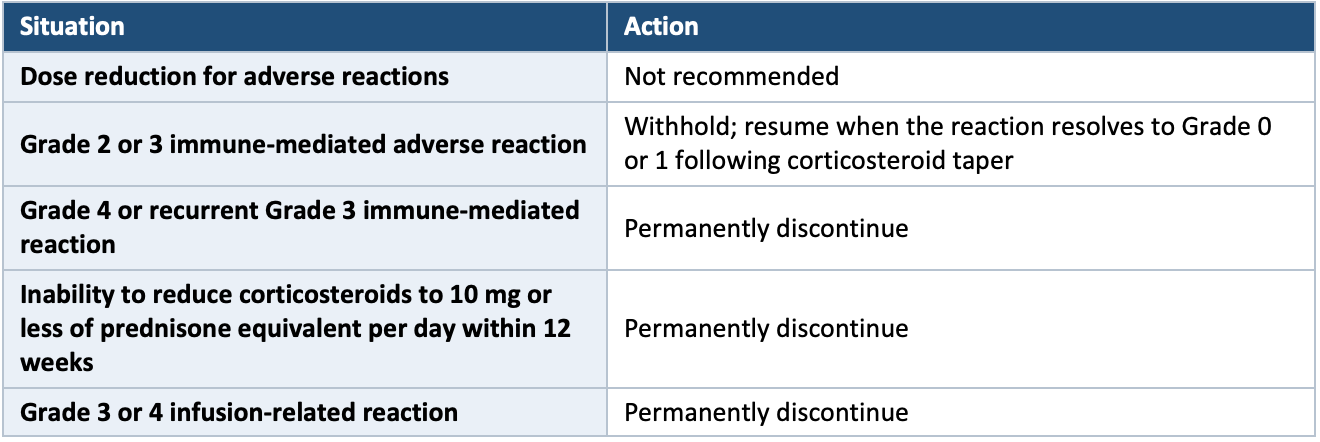
- No dose reductions of KEYTRUDA are recommended. Adverse reactions are managed by withholding or permanently discontinuing treatment, with corticosteroids administered as appropriate. Organ-specific thresholds differ; refer to KEYTRUDA prescribing information for the full modification table.1
Pivotal Study
KEYNOTE-522 (NCT03036488)
- Key Inclusion Criteria: 1,174 patients with newly diagnosed, previously untreated, non-metastatic stage II or III TNBC (T1c N1-2 or T2-4 N0-2), ECOG performance status 0 to 1, enrolled without regard to tumor PD-L1 expression.1,6
- Treatment: Randomized 2:1 to 4 cycles of neoadjuvant pembrolizumab 200 mg every 3 weeks (n=784) or placebo (n=390), each with paclitaxel and carboplatin, followed by 4 cycles with doxorubicin or epirubicin and cyclophosphamide, then surgery, then 9 cycles of adjuvant pembrolizumab or placebo.1,6
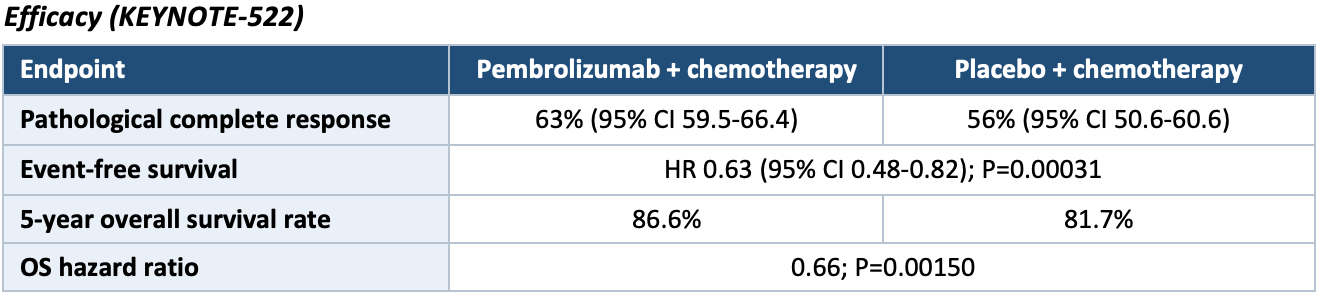
- Analysis note: the pathological complete response figures above are the label and FDA figures for the full trial population. The frequently quoted 64.8% versus 51.2% comes from the earlier interim analysis of the first 602 patients published in 2020, and yields a much larger treatment difference (13.6 percentage points versus 7.5). Do not mix figures from the two analyses.1,6
KEYNOTE-355 (NCT02819518)
- Design and efficacy: Patients with locally recurrent inoperable or metastatic TNBC not previously treated with chemotherapy in the metastatic setting, randomized 2:1 to pembrolizumab 200 mg every 3 weeks or placebo, each with investigator's choice of nab-paclitaxel, paclitaxel, or gemcitabine plus carboplatin. In the CPS 10 or higher population, median progression-free survival was 9.7 versus 5.6 months (HR 0.66) and median overall survival was 23.0 versus 16.1 months (HR 0.73; P=0.0093).2
- Fair balance: KEYNOTE-355 demonstrated benefit only in the CPS 10 or higher population. Neither the CPS 1 or higher population nor the intention-to-treat population met the prespecified criteria for statistical significance, which is why the metastatic indication is restricted to CPS 10 or higher. Any efficacy slide for this setting must state the negative CPS 1 or higher result alongside the CPS 10 or higher result.2
Safety
- Key warnings: immune-mediated adverse reactions may be severe or fatal and can occur in any organ system, including pneumonitis, colitis, hepatitis, endocrinopathies, nephritis, and severe skin reactions. Also notable are infusion-related reactions, complications of allogeneic hematopoietic stem cell transplantation, and embryo-fetal toxicity. Evaluate liver enzymes, creatinine, and thyroid function at baseline and periodically.1
KEYNOTE-522 (high-risk early-stage TNBC; N=778)
- Summary: Serious adverse reactions occurred in 44% of patients; those at 2% or higher were febrile neutropenia (15%), pyrexia (3.7%), anemia (2.6%), and neutropenia (2.2%). Fatal adverse reactions occurred in 0.9%, including one each of adrenal crisis, autoimmune encephalitis, hepatitis, pneumonia, pneumonitis, pulmonary embolism, and sepsis with multiple organ dysfunction syndrome. Pembrolizumab was discontinued in 20% of patients, most commonly for increased ALT (2.7%), increased AST (1.5%), and rash (1%).1
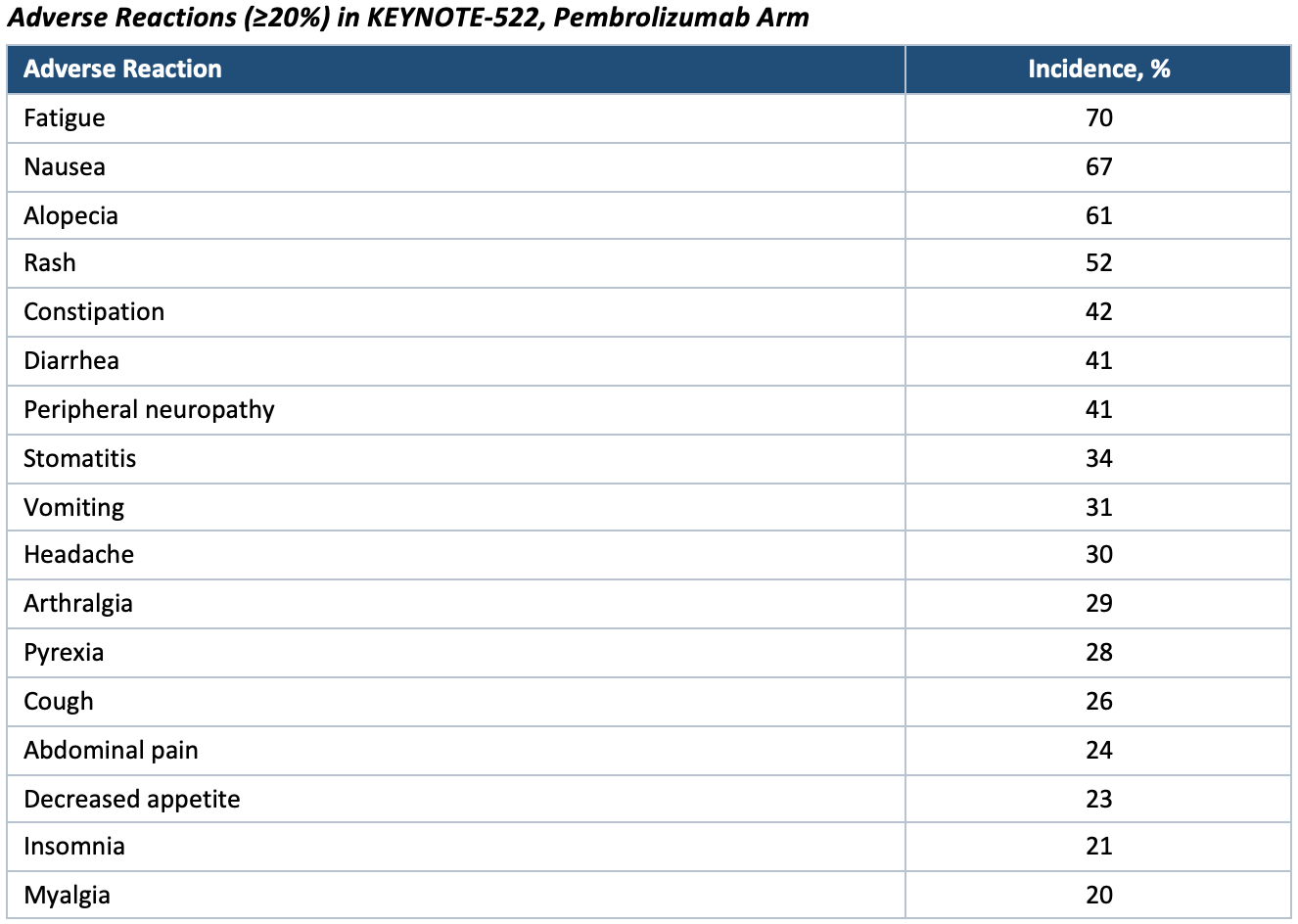
- These rates reflect pembrolizumab given with neoadjuvant chemotherapy followed by pembrolizumab alone, so they include chemotherapy-attributable toxicity and are not a monotherapy profile.1
KEYNOTE-355 (metastatic TNBC; N=596)
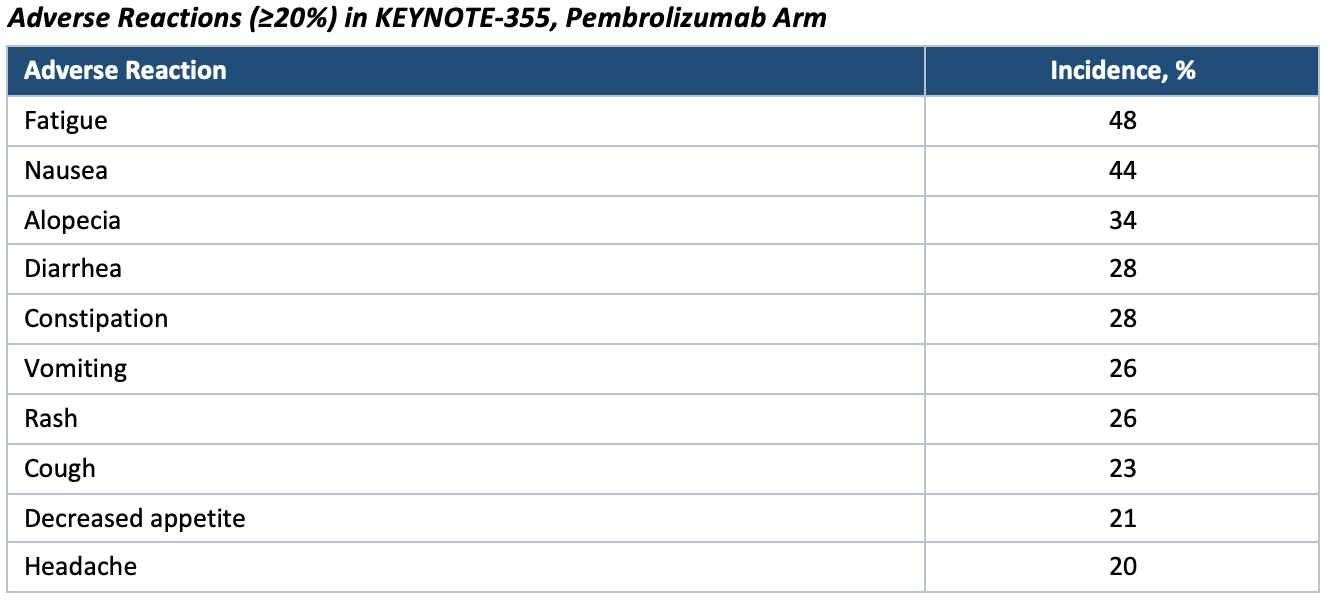
- Summary: Serious adverse reactions occurred in 30% of patients; those at 2% or higher were pneumonia (2.9%), anemia (2.2%), and thrombocytopenia (2%). Fatal adverse reactions occurred in 2.5%, including cardio-respiratory arrest (0.7%) and septic shock (0.3%). Pembrolizumab was discontinued in 11% of patients, most commonly for increased ALT (2.2%), increased AST (1.5%), and pneumonitis (1.2%).1
References
1. KEYTRUDA (pembrolizumab) injection. Prescribing information. Merck Sharp & Dohme LLC. Accessed July 2026.
2. KEYTRUDA QLEX (pembrolizumab and berahyaluronidase alfa-pmph) injection. Prescribing information. Merck Sharp & Dohme LLC. Accessed July 2026.
3. US Food and Drug Administration. FDA grants accelerated approval to pembrolizumab for locally recurrent unresectable or metastatic triple negative breast cancer. November 13, 2020. Accessed July 2026.
4. Merck & Co, Inc. FDA approves KEYTRUDA (pembrolizumab) for treatment of patients with high-risk early-stage triple-negative breast cancer. News release. July 26, 2021. Accessed July 2026.
5. Merck & Co, Inc. FDA approves KEYTRUDA and KEYTRUDA QLEX, each with Trodelvy, as first-line treatment of PD-L1-positive (CPS 10 or higher) advanced TNBC. News release. June 2026. Accessed July 2026.
6. Schmid P, Cortes J, Pusztai L, et al. Pembrolizumab for early triple-negative breast cancer (KEYNOTE-522). N Engl J Med. 2020;382(9):810-821. doi:10.1056/NEJMoa1910549