Brand: Itovebi
Initial US Approval
- 20241
Indications
- In combination with palbociclib and fulvestrant for the treatment of adults with endocrine-resistant, PIK3CA-mutated, hormone receptor (HR)-positive, HER2-negative locally advanced or metastatic breast cancer, as detected by an FDA-approved test, following recurrence on or after completing adjuvant endocrine therapy.1
- Select patients based on the presence of one or more PIK3CA mutations in a plasma specimen. Unlike alpelisib and capivasertib, the inavolisib label specifies plasma rather than tissue or plasma.1
Recommended Dose/Route
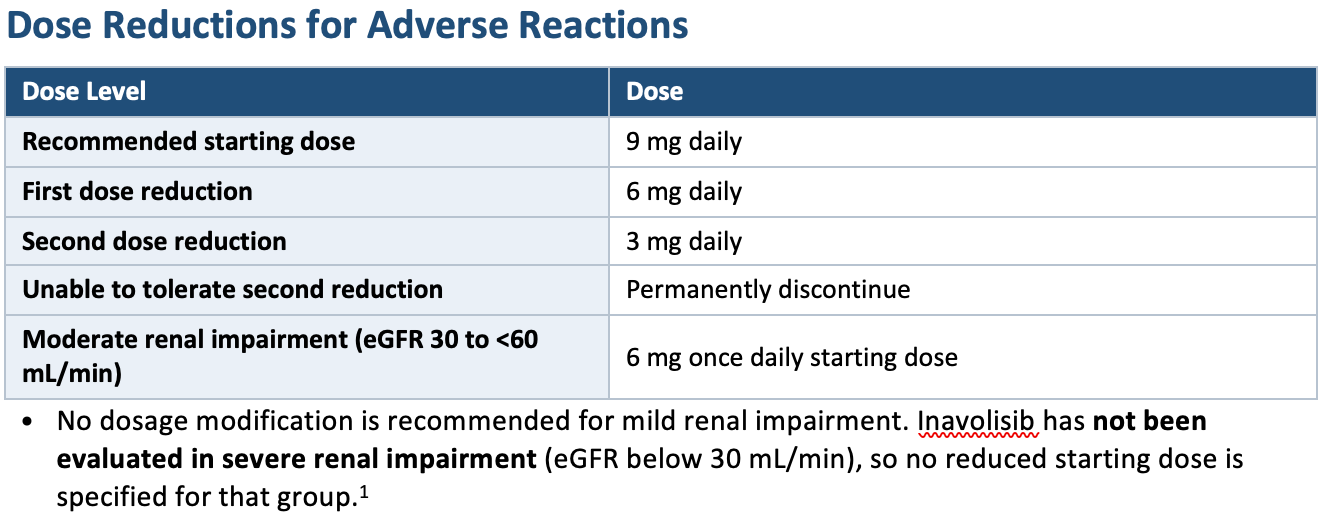
- 9 mg orally once daily with or without food, at approximately the same time each day, until disease progression or unacceptable toxicity. Tablets are supplied as 3 mg and 9 mg.1
- Given with palbociclib 125 mg once daily for 21 consecutive days followed by 7 days off (28-day cycle), and fulvestrant 500 mg intramuscularly on Cycle 1 Days 1 and 15, then Day 1 of every 28-day cycle.1
- Swallow tablets whole. If a dose is missed, take it within 9 hours; after more than 9 hours, skip and resume at the next scheduled time. If a dose is vomited, do not take an additional dose that day.1
- Evaluate fasting glucose and HbA1c and optimize blood glucose before starting. After initiating, monitor fasting glucose every 3 days for the first week, weekly for the next 3 weeks, every 2 weeks for the next 8 weeks, then every 4 weeks; monitor HbA1c every 3 months.1
- Pre- and perimenopausal women should receive an LHRH agonist; consider one for men.1
Pivotal Study
INAVO120 (NCT04191499)
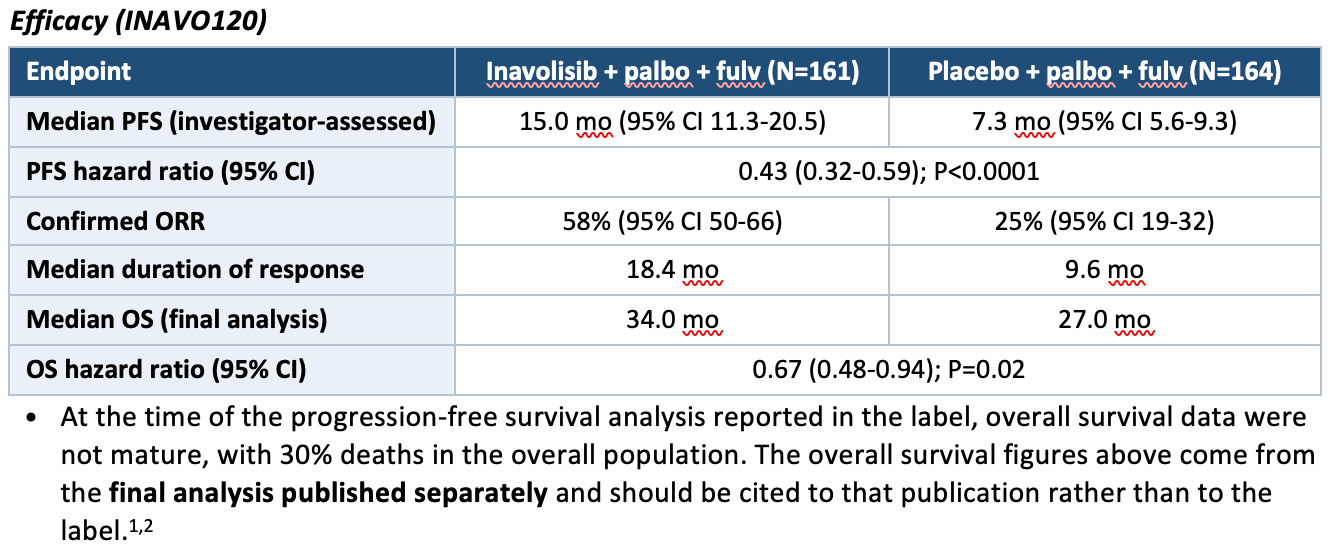
- Key Inclusion Criteria: Endocrine-resistant, PIK3CA-mutated, HR-positive/HER2-negative (IHC 0 or 1+, or IHC 2+/ISH-negative) locally advanced or metastatic breast cancer that progressed during or within 12 months of completing adjuvant endocrine therapy, with no prior systemic therapy for advanced disease. Patients were required to have HbA1c below 6% and fasting blood glucose below 126 mg/dL; type 1 diabetes and type 2 diabetes requiring ongoing anti-hyperglycemic treatment were excluded.1,2
- Treatment: Inavolisib 9 mg once daily (n=161) or placebo (n=164), each with palbociclib and fulvestrant. Randomization was stratified by visceral disease, endocrine resistance (primary or secondary), and geographic region.1
Safety
INAVO120 (N=162)
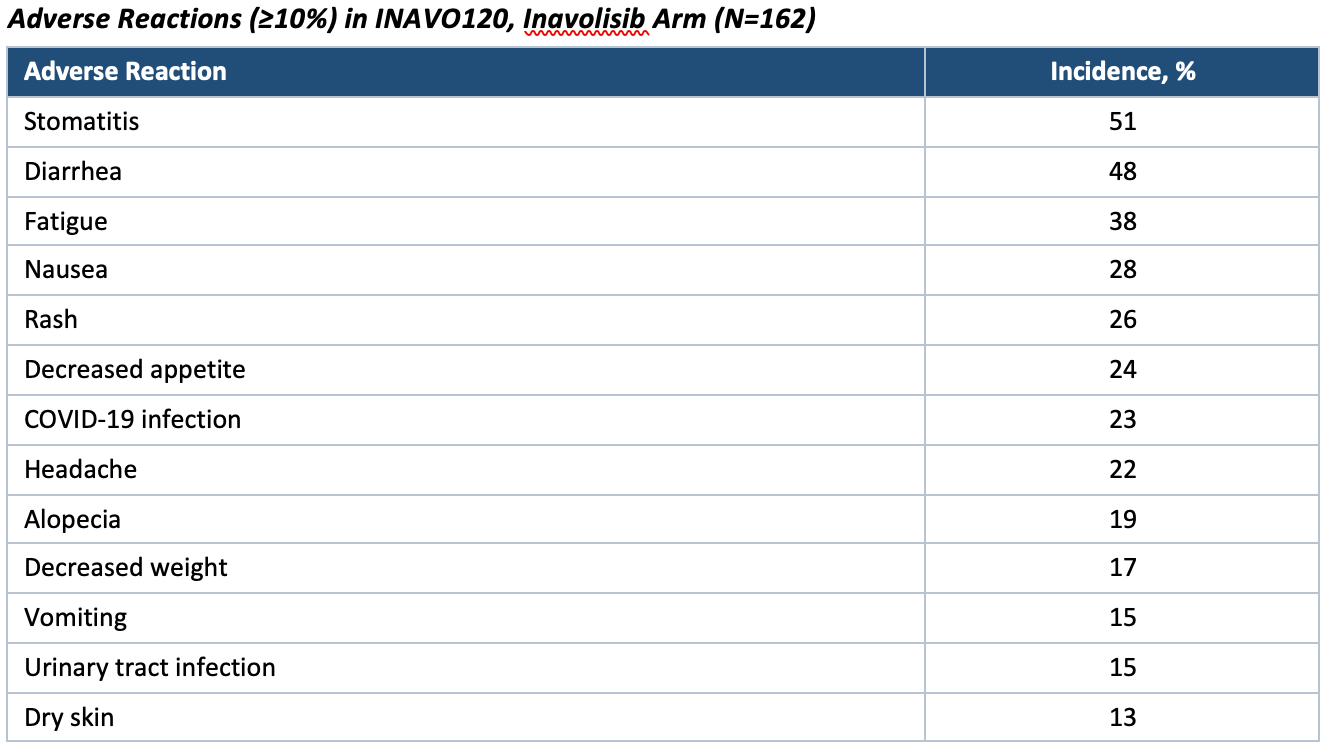
- Summary: Serious adverse reactions occurred in 24% of patients, those at 1% or higher being anemia (1.9%), diarrhea (1.2%), and urinary tract infection (1.2%). Fatal adverse reactions occurred in 3.7%, including acute coronary syndrome, cerebral hemorrhage, cerebrovascular accident, COVID-19 infection, and gastrointestinal hemorrhage (0.6% each). Permanent discontinuation of inavolisib occurred in 6%, dosage interruption in 69%, and dose reduction in 14%. Median duration of treatment was 9 months.1
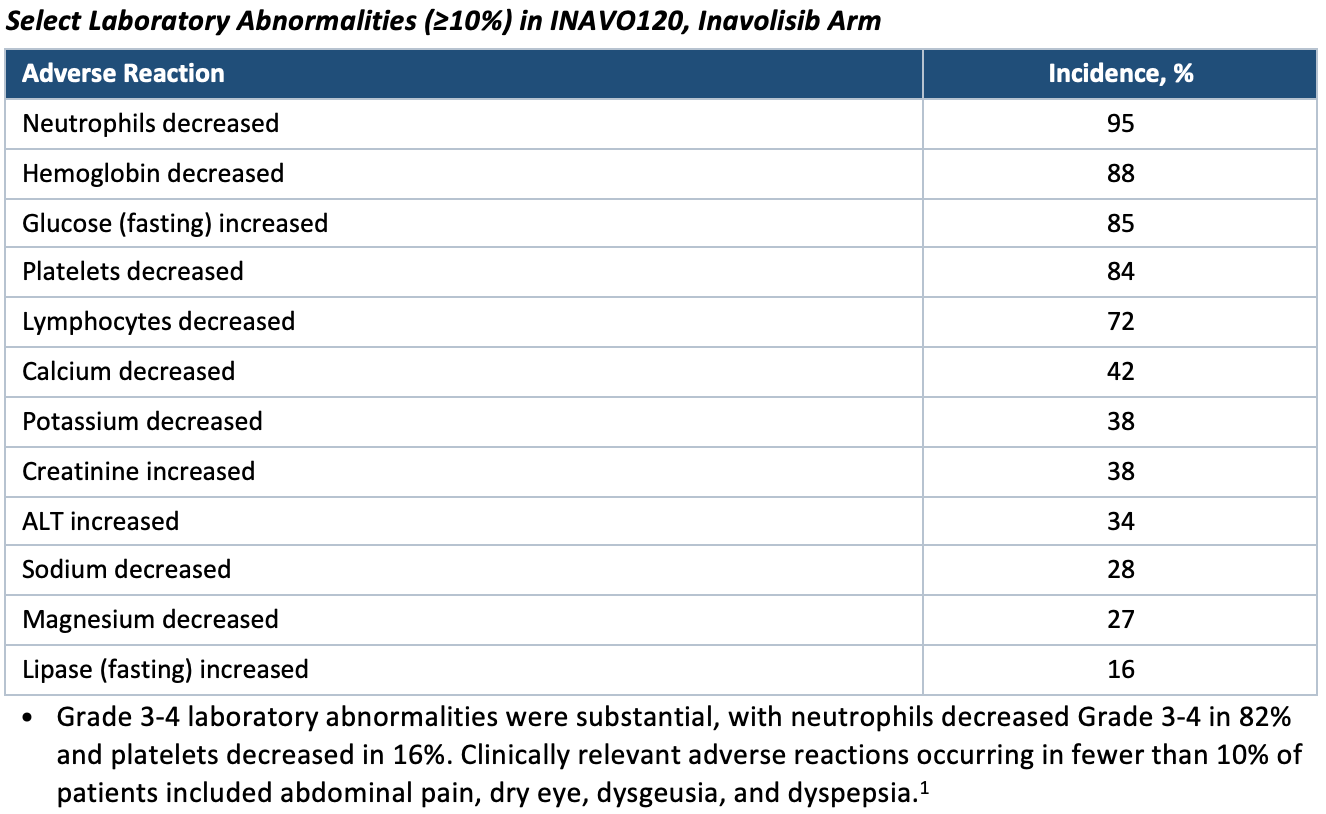
- Key warnings: hyperglycemia, with increased fasting glucose in 85% of patients (Grade 2 in 22%, Grade 3 in 12%, Grade 4 in 0.6%); 46% required oral anti-hyperglycemic medication and 7% required insulin. Ketoacidosis with a fatal outcome has occurred in the postmarketing setting. Stomatitis occurred in 51% (Grade 3 in 6%), with 38% of patients using a corticosteroid-containing mouthwash. Diarrhea occurred in 48% (Grade 3 in 3.7%). Embryo-fetal toxicity applies, with effective non-hormonal contraception advised during treatment and for 1 week after the last dose.1
References
1. ITOVEBI (inavolisib) tablets. Prescribing information. Genentech, Inc; revised 10/2024. Accessed July 2026.
2. Jhaveri KL, Im SA, Saura C, et al. Inavolisib-based therapy in PIK3CA-mutated advanced breast cancer (INAVO120). N Engl J Med. 2024;391(17):1584-1596. doi:10.1056/NEJMoa2404625. Final overall survival: N Engl J Med. 2025;393(2):151-161.