Initial US Approval
- 20231
Indications
- In combination with fulvestrant for adults with HR-positive, HER2-negative (IHC 0 or 1+, or IHC 2+/ISH-negative) locally advanced or metastatic breast cancer with one or more PIK3CA/AKT1/PTEN alterations, as detected by an FDA-approved test, following progression on at least one endocrine-based regimen in the metastatic setting or recurrence on or within 12 months of completing adjuvant therapy.1
- Select patients based on PIK3CA/AKT1/PTEN alterations detected by FoundationOne CDx (tissue) or FoundationOne Liquid CDx (plasma).1
Recommended Dose/Route
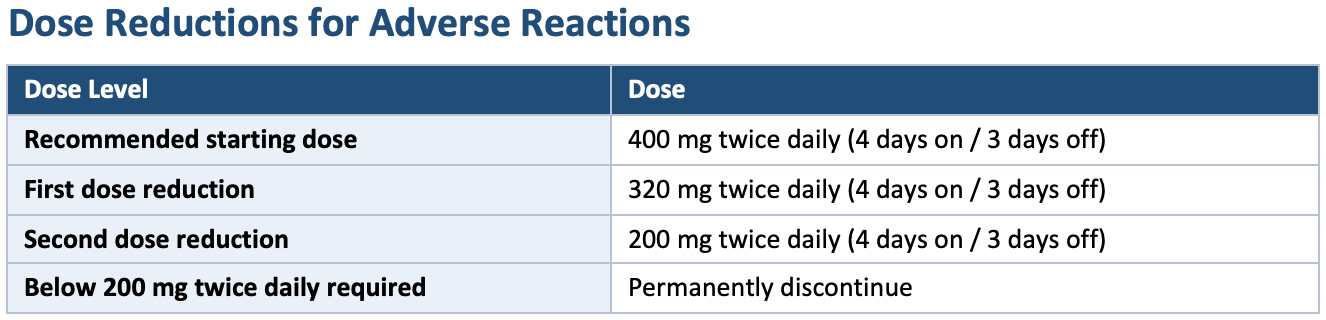
- 400 mg orally twice daily, approximately 12 hours apart, taken for 4 consecutive days followed by 3 days off each week, in combination with fulvestrant, until disease progression or unacceptable toxicity.1
- The intermittent 4-days-on, 3-days-off schedule was selected in early-phase trials based on tolerability and degree of target inhibition. It is distinctive among the agents in this class and is a common source of dosing error.1
- Assess fasting glucose and HbA1c before starting and monitor during treatment. Swallow tablets whole with or without food.1
Pivotal Study
CAPItello-291 (NCT04305496)
- Key Inclusion Criteria: HR-positive/HER2-negative locally advanced or metastatic breast cancer with relapse or progression on or after an aromatase inhibitor, with or without prior CDK4/6 inhibitor therapy; 708 patients randomized, of whom 289 had PIK3CA/AKT1/PTEN-altered tumors.1,2
- Treatment: Capivasertib 400 mg twice daily (4 days on / 3 days off) plus fulvestrant versus placebo plus fulvestrant. Dual primary endpoints were investigator-assessed progression-free survival in the overall population and in the altered population.1,2
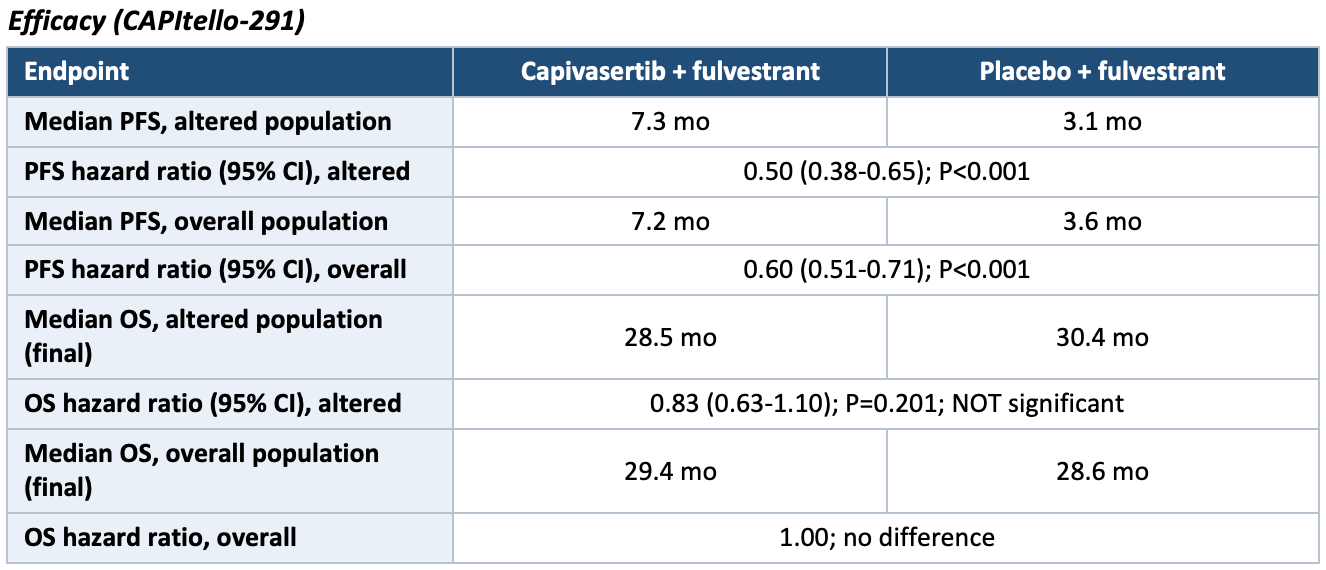
- CAPItello-291 met both primary progression-free survival endpoints. At the time of the primary analysis, overall survival was immature but numerically favorable. The final overall survival analysis, presented at ESMO Breast Cancer 2026, showed no statistically significant benefit in either population, and the median in the altered population numerically favored placebo. The analysis had only 53% power for overall survival, and subsequent targeted therapy was used more often in the placebo arm (42.5% versus 25.8%), which may have diluted any difference. Any efficacy slide must state the negative final overall survival result alongside the positive progression-free survival result.3
Safety
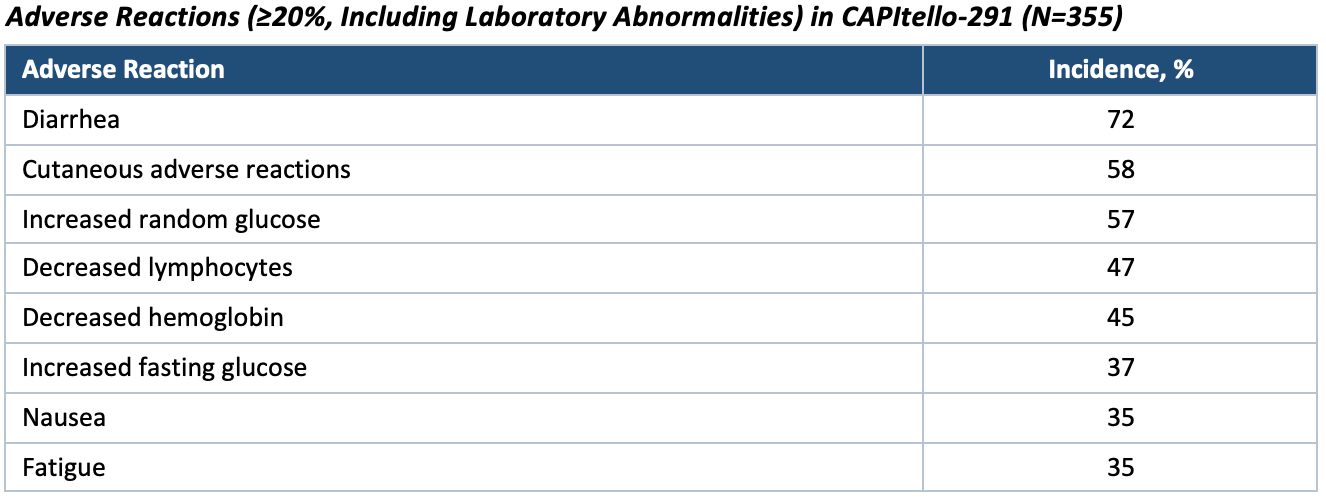
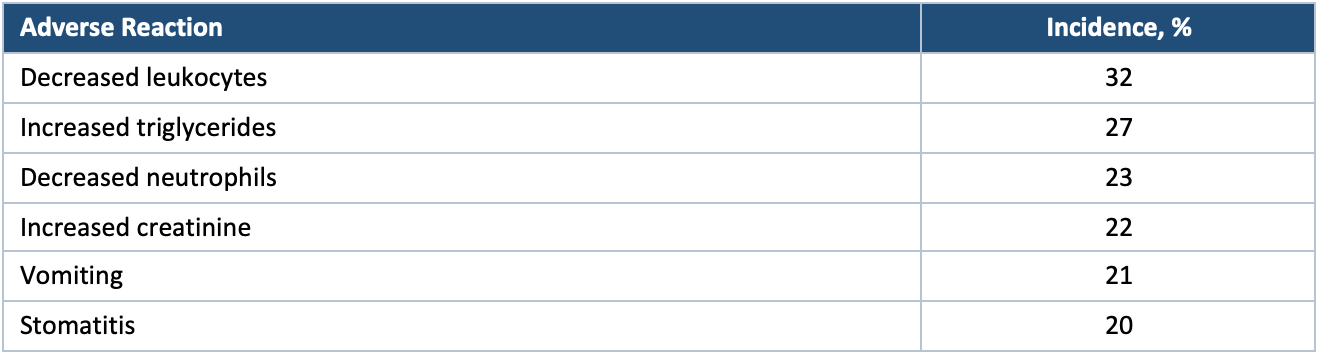
- Key warnings: hyperglycemia, which occurred in 18% of patients (Grade 3-4 in 2.8%, with diabetic ketoacidosis in 0.3%); severe cutaneous adverse reactions; diarrhea, which may be severe; and embryo-fetal toxicity. Diarrhea and cutaneous reactions were the most frequent adverse reactions overall and occurred early, generally low grade. In CAPItello-291, 12% (43/355) of patients had an anti-hyperglycemic medication initiated or changed during treatment.1,4
References
1. TRUQAP (capivasertib) tablets. Prescribing information. AstraZeneca Pharmaceuticals LP. Accessed July 2026.
2. Turner NC, Oliveira M, Howell SJ, et al. Capivasertib in hormone receptor-positive advanced breast cancer (CAPItello-291). N Engl J Med. 2023;388(22):2058-2070. doi:10.1056/NEJMoa2214131
3. CAPItello-291 final overall survival analysis. Presented at: ESMO Breast Cancer Congress 2026.
4. Oliveira M, Rugo HS, Howell SJ, et al. Characterization, time course, and management of frequent adverse events from the phase III CAPItello-291 study. ESMO Open. 2024. doi:10.1016/j.esmoop.2024.103621