Brand: Piqray
Initial US Approval
- 20191
Indications
- In combination with fulvestrant for the treatment of adults with hormone receptor (HR)-positive, HER2-negative, PIK3CA-mutated advanced or metastatic breast cancer, as detected by an FDA-approved test, following progression on or after an endocrine-based regimen.1
- Select patients based on one or more PIK3CA mutations in tumor tissue or plasma using therascreen PIK3CA RGQ PCR. If no mutation is detected in plasma, test tumor tissue.1
Recommended Dose/Route
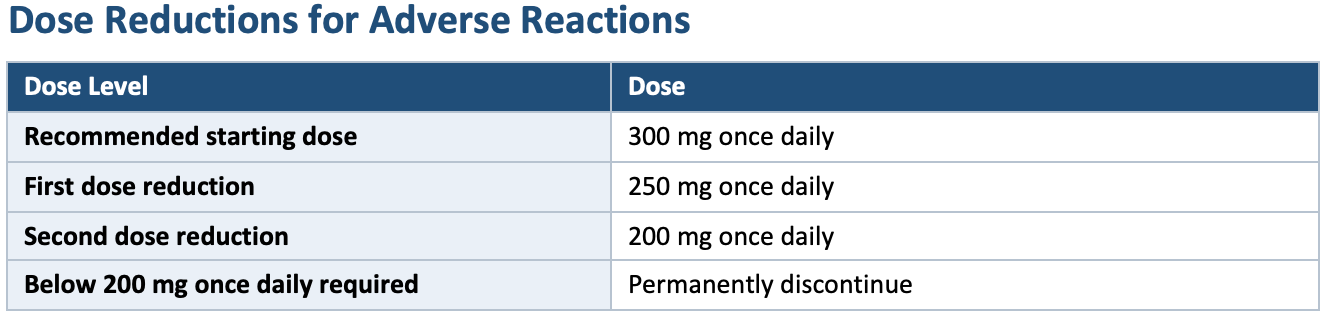
- 300 mg (two 150 mg tablets) orally once daily with food, at approximately the same time each day, until disease progression or unacceptable toxicity, plus fulvestrant 500 mg intramuscularly on Days 1, 15, and 29 and once monthly thereafter.1
- Before initiating, test fasting plasma glucose and HbA1c and optimize glucose. Monitor fasting glucose at least once weekly for the first 2 weeks, then at least once every 4 weeks, and HbA1c every 3 months.1
- Initiate antihistamine prophylaxis and monitor for severe cutaneous reactions. Swallow tablets whole; do not chew, crush, or split.1
Pivotal Study
SOLAR-1 (NCT02437318)
- Key Inclusion Criteria: HR-positive/HER2-negative advanced or metastatic breast cancer with progression on or after an aromatase inhibitor, enrolled into PIK3CA-mutant and non-mutant cohorts.1,2
- Treatment: Alpelisib 300 mg once daily (n=284) versus placebo (n=287), each with fulvestrant 500 mg.1,2
Efficacy (PIK3CA-Mutated Cohort)

- No progression-free survival benefit was observed in patients whose tumors did not harbor a PIK3CA mutation (HR 0.85), which is the basis for the biomarker-restricted indication. Overall survival did not reach statistical significance; state this alongside the PFS result.1,2
Safety
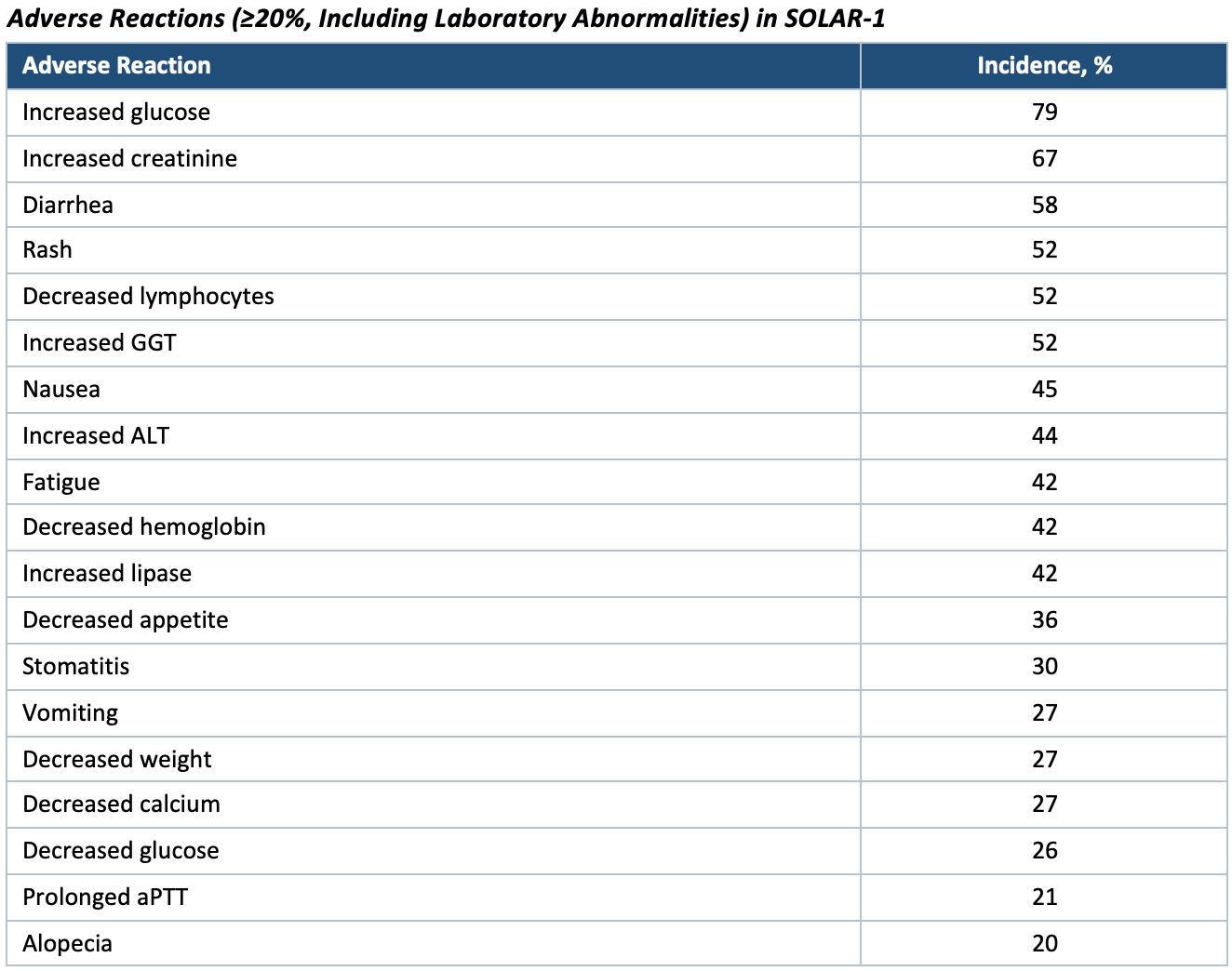
- Key warnings: severe hyperglycemia is the characteristic toxicity of PI3Kα inhibition, and ketoacidosis has occurred. Severe cutaneous adverse reactions, including Stevens-Johnson syndrome, erythema multiforme, and DRESS, and pneumonitis are also labeled risks. Two patients (0.7%) died from adverse reactions attributed to alpelisib. Embryo-fetal toxicity applies.1
References
1. PIQRAY (alpelisib) tablets. Prescribing information. Novartis Pharmaceuticals Corporation. Accessed July 2026.
2. André F, Ciruelos E, Rubovszky G, et al. Alpelisib for PIK3CA-mutated, hormone receptor-positive advanced breast cancer (SOLAR-1). N Engl J Med. 2019;380(20):1929-1940. doi:10.1056/NEJMoa1813904