Initial US Approval
- 20261,2
Indications
- Adults with estrogen receptor (ER)-positive, human epidermal growth factor receptor 2 (HER2)-negative, estrogen receptor-1 (ESR1)-mutated advanced or metastatic breast cancer, as detected by an FDA-authorized test, with disease progression following at least one line of endocrine therapy.1,2
Recommended Dose/Route
- Vepdegestrant 200 mg orally once daily with food, until disease progression or unacceptable toxicity. Available as 100 mg and 200 mg tablets.1
- Swallow tablets whole; do not chew, crush, dissolve, or split. If a dose is missed or vomited, take the next dose at the regularly scheduled time.1
- Select patients based on the presence of ESR1 mutation(s) in a plasma specimen (ctDNA); Guardant360 CDx is the FDA-authorized companion diagnostic.1,2
- Perform an ECG before initiation and do not initiate in patients with QTc greater than 470 msec. Correct hypokalemia and hypomagnesemia before and during treatment. Repeat ECG approximately 4 weeks after initiating treatment and as clinically indicated.1
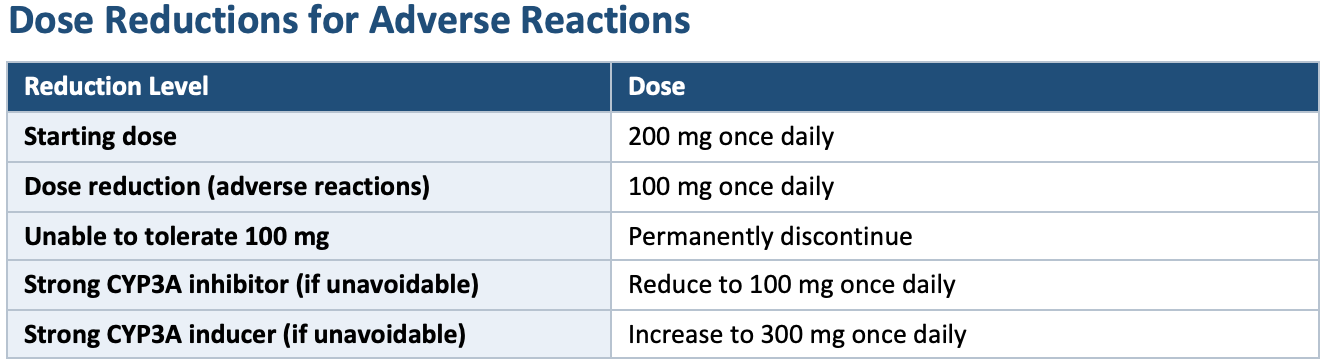
- QTc prolongation follows a separate modification schedule. Withhold for QTc greater than 480 msec or an increase greater than 60 msec from baseline; management at QTc greater than 500 msec depends on whether a reversible cause is identified, with permanent discontinuation if it recurs. Permanently discontinue for Torsade de Pointes, polymorphic ventricular tachycardia, or signs or symptoms of serious arrhythmia (see VEPPANU prescribing information, Table 2).1
- Embryo-fetal toxicity: Vepdegestrant can cause fetal harm. Verify pregnancy status before initiating. Advise females and males of reproductive potential to use effective contraception during treatment and for 2 weeks after the last dose.1
Pivotal Studies
VERITAC-2 (NCT05654623)
- Key Inclusion Criteria: Adults with ER-positive/HER2-negative advanced or metastatic breast cancer; disease progression on 1 to 2 prior lines of endocrine therapy, including one with a CDK4/6 inhibitor. Patients were excluded if they had received chemotherapy for advanced disease, fulvestrant in any line, or if progression on the most recent endocrine therapy occurred within the first 6 months. N=624 enrolled, of whom 270 had ESR1-mutated tumors.1
- Treatment: Randomized 1:1 to vepdegestrant 200 mg orally once daily (N=313) or fulvestrant 500 mg intramuscularly on Days 1 and 15 of Cycle 1 and then once monthly thereafter (N=311). Randomization was stratified by ESR1 mutation status and visceral metastasis.1
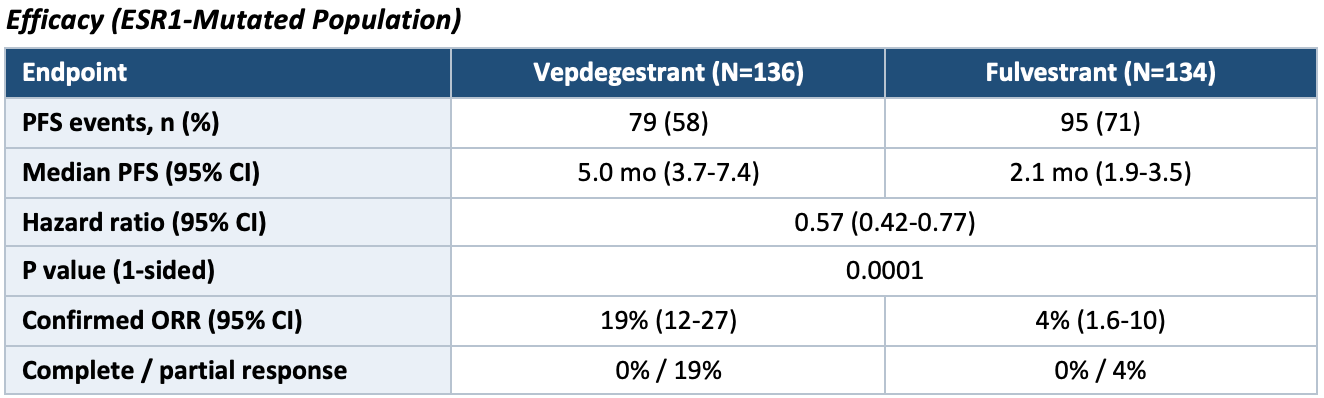
- Objective response rate was assessed in patients with measurable disease (n=97 vepdegestrant, n=100 fulvestrant).1
- Fair balance: The major efficacy outcome was progression-free survival by blinded independent central review in both the ESR1-mutated population and the overall population. A statistically significant difference was demonstrated only in the ESR1-mutated population (N=270). Overall survival was immature, with 16% of deaths in this population at the time of the PFS analysis.1,3
Safety
VERITAC-2 (VEPPANU arm, N=312)
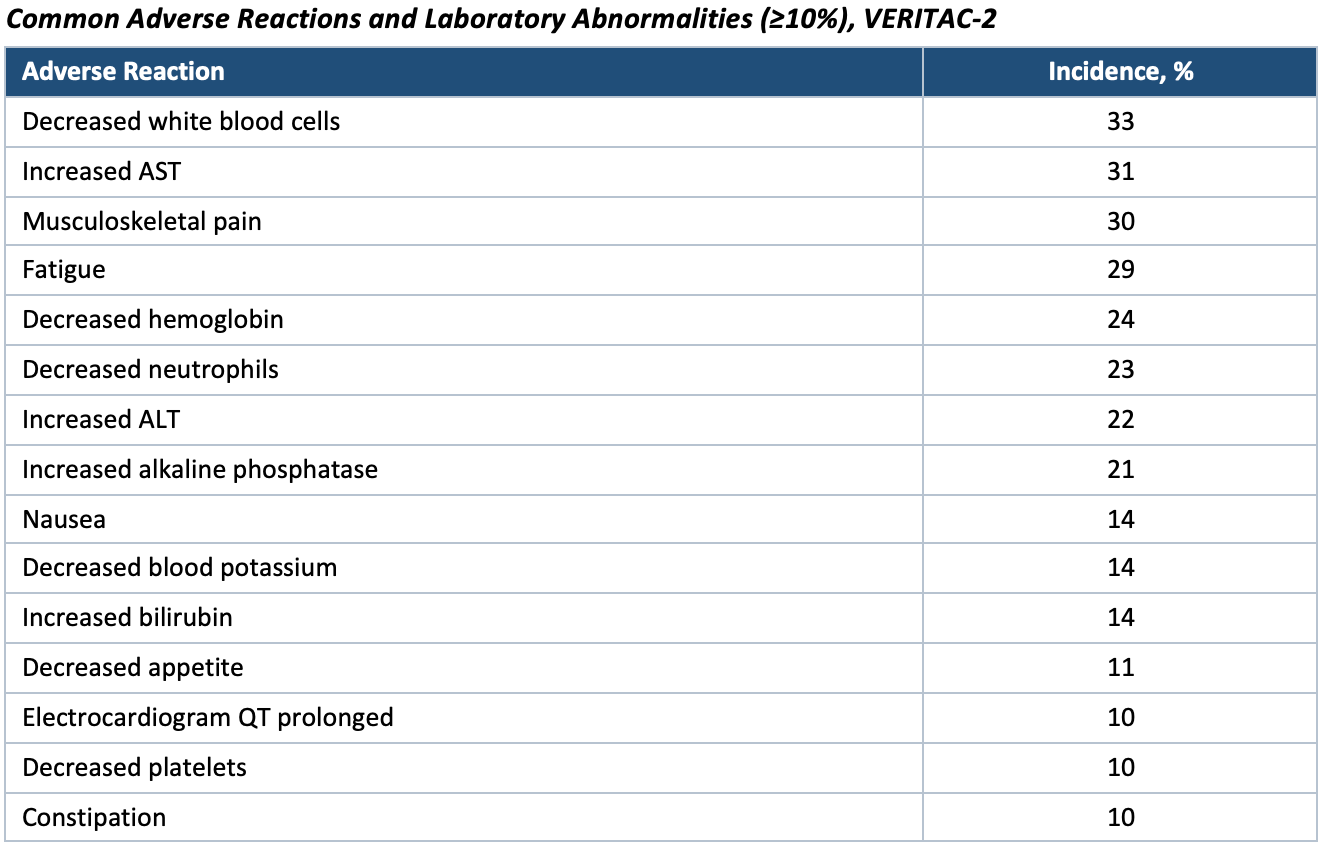
- Common Adverse Reactions (≥10%): Musculoskeletal pain (30%), fatigue (29%), nausea (14%), decreased appetite (11%), electrocardiogram QT prolonged (10%), and constipation (10%).1
- Common Laboratory Abnormalities (≥10%): Decreased white blood cells (33%), increased AST (31%), decreased hemoglobin (24%), decreased neutrophils (23%), increased ALT (22%), increased alkaline phosphatase (21%), decreased blood potassium (14%), increased bilirubin (14%), and decreased platelets (10%).1
- Serious Adverse Reactions: 9%, including any fracture (1.3%), fall, hypercalcemia, hepatic injury, pneumonia, musculoskeletal pain (0.6% each), and QTc prolonged (0.3%).1
- Fatal Adverse Reactions: 1.0%, including dyspnea, cerebral ischemia, and unknown cause (one patient each).1
- Dosage Interruption Due to AEs: 14%.1
- Dosage Reductions Due to AEs: 1.9%.1
- Permanent Discontinuation Due to AEs: 2.9%, due to increased ALT and dyspnea (0.6% each).1
- Key Warning, QTc Interval Prolongation: Reported in 10% of patients (Grade 3 in 1.6%). QTc by Fridericia's method exceeded 500 msec in 1.6% of patients, and the increase from baseline exceeded 60 msec in 2.6%. Dose reduction was required in 0.3% of patients due to QTc prolongation.1
- Clinically relevant adverse reactions in fewer than 10% of patients included headache, hot flush, diarrhea, vomiting, bradycardia, and urinary tract infection.1
References
1. VEPPANU (vepdegestrant). Prescribing information. Rigel Pharmaceuticals, Inc; revised 6/2026. Accessed July 2026. https://veppanu.com/downloads/pdf/VEPPANU-Full-Prescribing-Information.pdf
2. US Food and Drug Administration. FDA approves vepdegestrant for ER-positive, HER2-negative, ESR1-mutated advanced or metastatic breast cancer. May 1, 2026. Accessed July 2026.
3. Hamilton E, De Laurentiis M, Jhaveri K, et al. Vepdegestrant, a PROTAC estrogen receptor degrader, vs fulvestrant in ER-positive/HER2-negative advanced breast cancer: results of the global, randomized, phase 3 VERITAC-2 study. J Clin Oncol. 2025;43(suppl 17):LBA1000.