Initial US Approval
- 20231
Indications
- Postmenopausal women or adult men with estrogen receptor (ER)-positive, human epidermal growth factor receptor 2 (HER2)-negative, ESR1-mutated advanced or metastatic breast cancer with disease progression following at least one line of endocrine therapy.1
Recommended Dose/Route
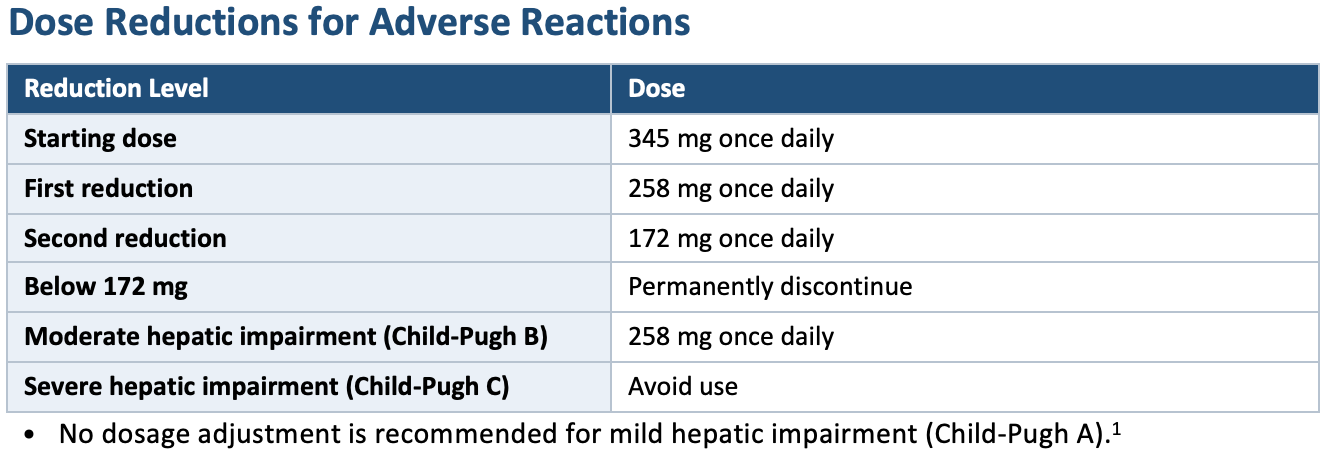
- Elacestrant 345 mg orally once daily with food, until disease progression or unacceptable toxicity. Available as 345 mg and 86 mg tablets.1
- Select patients for treatment based on the presence of an ESR1 mutation in a plasma specimen (ctDNA) using an FDA-approved test.1
- Monitor lipid profile prior to starting and periodically during treatment.1
- Avoid concomitant use of strong or moderate CYP3A4 inhibitors and inducers (see ORSERDU prescribing information).1
Pivotal Studies
EMERALD (NCT03778931)
- Key Inclusion Criteria: Postmenopausal women or adult men with ER-positive/HER2-negative advanced or metastatic breast cancer; disease progression on 1 to 2 prior lines of endocrine therapy, including at least one containing a CDK4/6 inhibitor; up to one prior line of chemotherapy in the advanced/metastatic setting permitted. ESR1 mutation status was determined by the Guardant360 CDx assay. N=478 enrolled, of whom 228 had ESR1-mutated tumors.1,2
- Treatment: Elacestrant 345 mg orally once daily vs investigator's choice of standard-of-care endocrine monotherapy (fulvestrant, anastrozole, letrozole, or exemestane).1,2

Safety
EMERALD (ORSERDU arm, N=237)
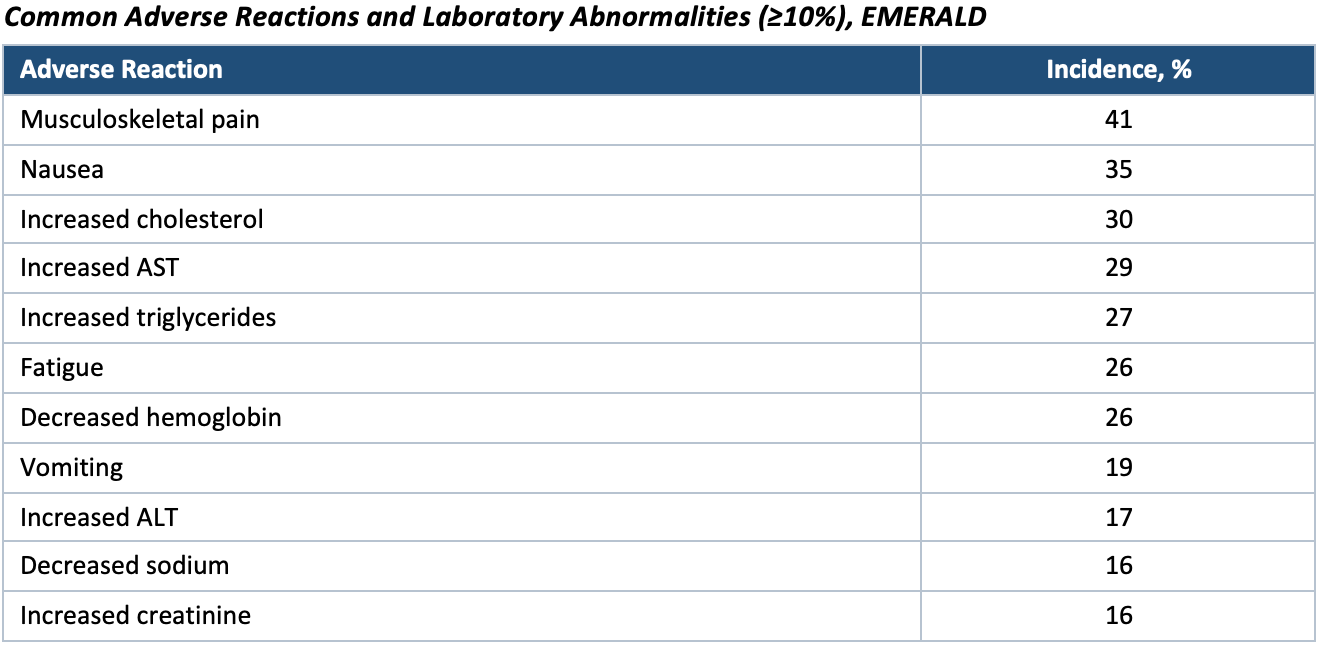
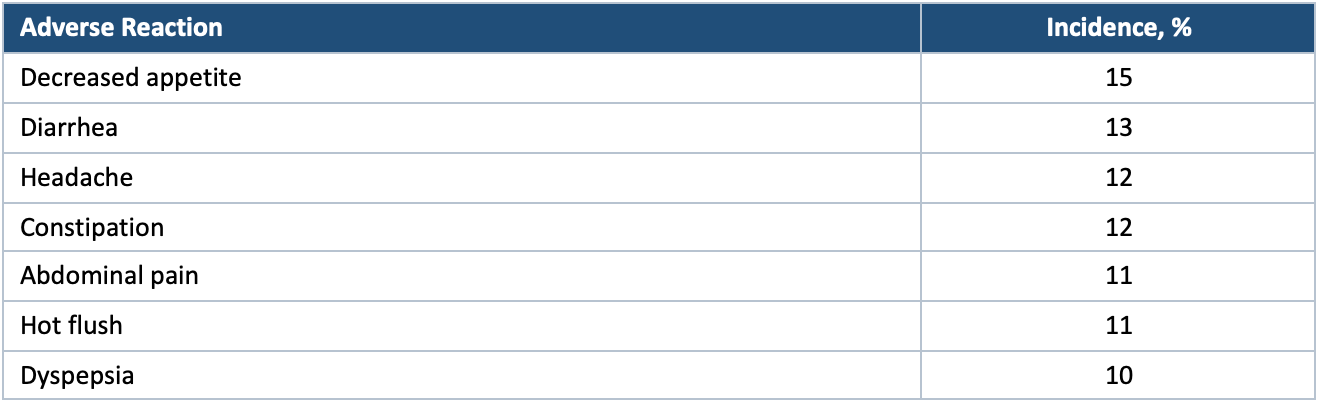
- Common Adverse Reactions (≥10%): Musculoskeletal pain (41%), nausea (35%), fatigue (26%), vomiting (19%), decreased appetite (15%), diarrhea (13%), headache (12%), constipation (12%), abdominal pain (11%), hot flush (11%), and dyspepsia (10%).1
- Common Laboratory Abnormalities (≥10%): Increased cholesterol (30%), increased AST (29%), increased triglycerides (27%), decreased hemoglobin (26%), increased ALT (17%), decreased sodium (16%), and increased creatinine (16%).1
- Serious Adverse Reactions: 12%. Serious reactions in more than 1% of patients were musculoskeletal pain (1.7%) and nausea (1.3%).1
- Fatal Adverse Reactions: 1.7%, including cardiac arrest, septic shock, diverticulitis, and unknown cause (one patient each).1
- Dose Reductions Due to AEs: 3%.1
- Permanent Discontinuation Due to AEs: 6%.1
- Key Warning, Dyslipidemia: Hypercholesterolemia and hypertriglyceridemia occurred at an incidence of 30% and 27%, respectively; Grade 3 and 4 incidence was 0.9% and 2.2%, respectively. Monitor lipid profile before and periodically during treatment.1
References
1. ORSERDU (elacestrant). Prescribing information. Stemline Therapeutics, Inc, a Menarini Group Company; 2023. Accessed July 2026.
2. Bidard FC, Kaklamani VG, Neven P, et al. Elacestrant (oral selective estrogen receptor degrader) versus standard endocrine therapy for estrogen receptor-positive, human epidermal growth factor receptor 2-negative advanced breast cancer: results from the randomized phase III EMERALD trial. J Clin Oncol. 2022;40(28):3246-3256. doi:10.1200/JCO.22.00338