Brand: Lynparza
Initial US Approval
- 20141
- Breast cancer indications added January 12, 2018 (germline BRCA-mutated HER2-negative metastatic disease) and March 11, 2022 (adjuvant treatment of high-risk early breast cancer).3,4
Indications
- Adults with deleterious or suspected deleterious germline BRCA-mutated, HER2-negative metastatic breast cancer who have been treated with chemotherapy in the neoadjuvant, adjuvant, or metastatic setting. Patients with hormone receptor-positive breast cancer should have been treated with a prior endocrine therapy or be considered inappropriate for endocrine treatment.1,3
- Adjuvant treatment of adults with deleterious or suspected deleterious germline BRCA-mutated, HER2-negative high-risk early breast cancer who have been treated with neoadjuvant or adjuvant chemotherapy.1,4
- Select patients based on an FDA-approved companion diagnostic (BRACAnalysis CDx), performed on germline DNA.1
Recommended Dose/Route
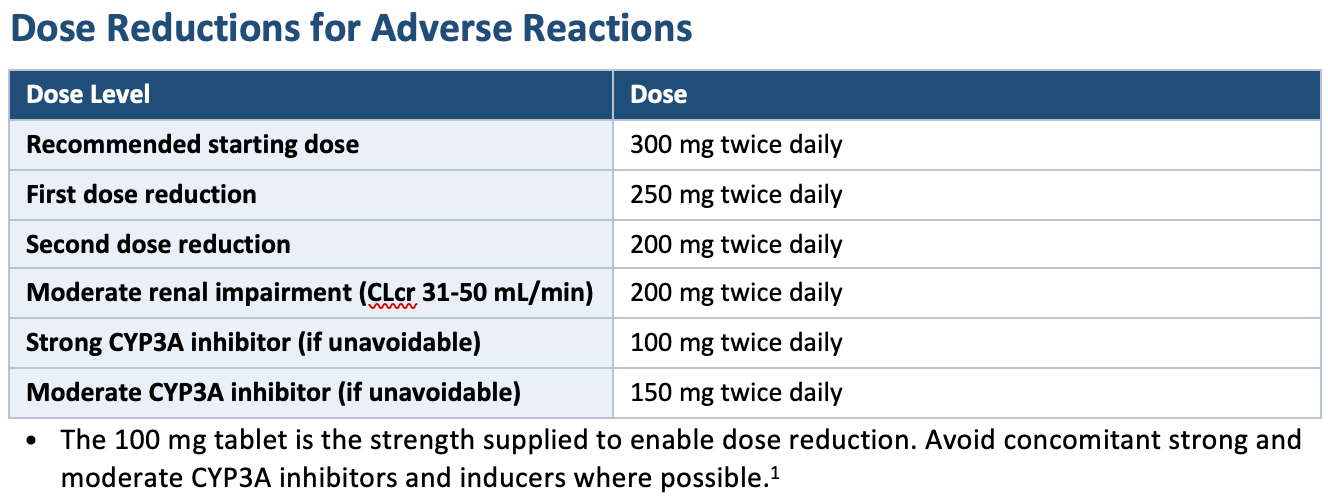
- 300 mg (two 150 mg tablets) orally twice daily, with or without food, for a total daily dose of 600 mg. Tablets are supplied as 150 mg and 100 mg. Do not substitute tablets for capsules on a milligram-to-milligram basis.1
- Adjuvant setting: continue for a total of 1 year, or until disease recurrence or unacceptable toxicity, whichever occurs first. Metastatic setting: continue until disease progression or unacceptable toxicity.1
- Patients with hormone receptor-positive, HER2-negative early breast cancer should continue concurrent endocrine therapy per current clinical practice guidelines.1
- Monitor complete blood counts at baseline and monthly thereafter. Do not start until recovery from hematologic toxicity caused by prior chemotherapy.1
Pivotal Study
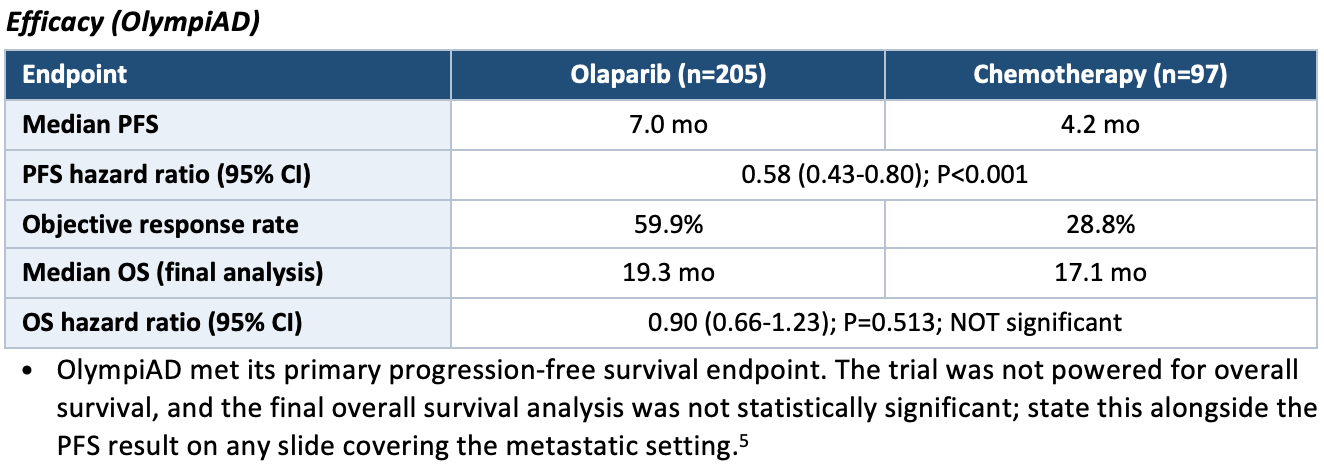
OlympiAD (NCT02000622)
- Key Inclusion Criteria: Adults with deleterious or suspected deleterious germline BRCA-mutated, HER2-negative metastatic breast cancer who had received prior chemotherapy in the neoadjuvant, adjuvant, or metastatic setting. Patients with hormone receptor-positive disease were required to have received prior endocrine therapy or to be considered inappropriate for it.1,2
- Treatment: 302 patients randomized 2:1 to olaparib 300 mg twice daily (n=205) or physician's choice of single-agent chemotherapy (capecitabine, vinorelbine, or eribulin; n=97).1,2
OlympiA (NCT02032823)
- Design and efficacy: 1,836 patients with germline BRCA1/2 pathogenic variants and HER2-negative high-risk early breast cancer, randomized 1:1 to 1 year of olaparib 300 mg twice daily or placebo after completing local treatment and neoadjuvant or adjuvant chemotherapy. Three-year invasive disease-free survival was 85.9% versus 77.1% (HR 0.58; P<0.001). A later prespecified analysis demonstrated a statistically significant overall survival benefit; the overall survival result was not significant at the first interim analysis and should not be presented as a primary-analysis finding.1,6
Safety
OlympiAD (metastatic setting)
- Key warnings: myelodysplastic syndrome and acute myeloid leukemia (MDS/AML), which occurred in less than 1.5% of patients exposed to olaparib monotherapy across trials and were fatal in the majority of cases; pneumonitis, which can be fatal; venous thromboembolism; and embryo-fetal toxicity. Interrupt treatment for prolonged hematologic toxicity pending investigation.1
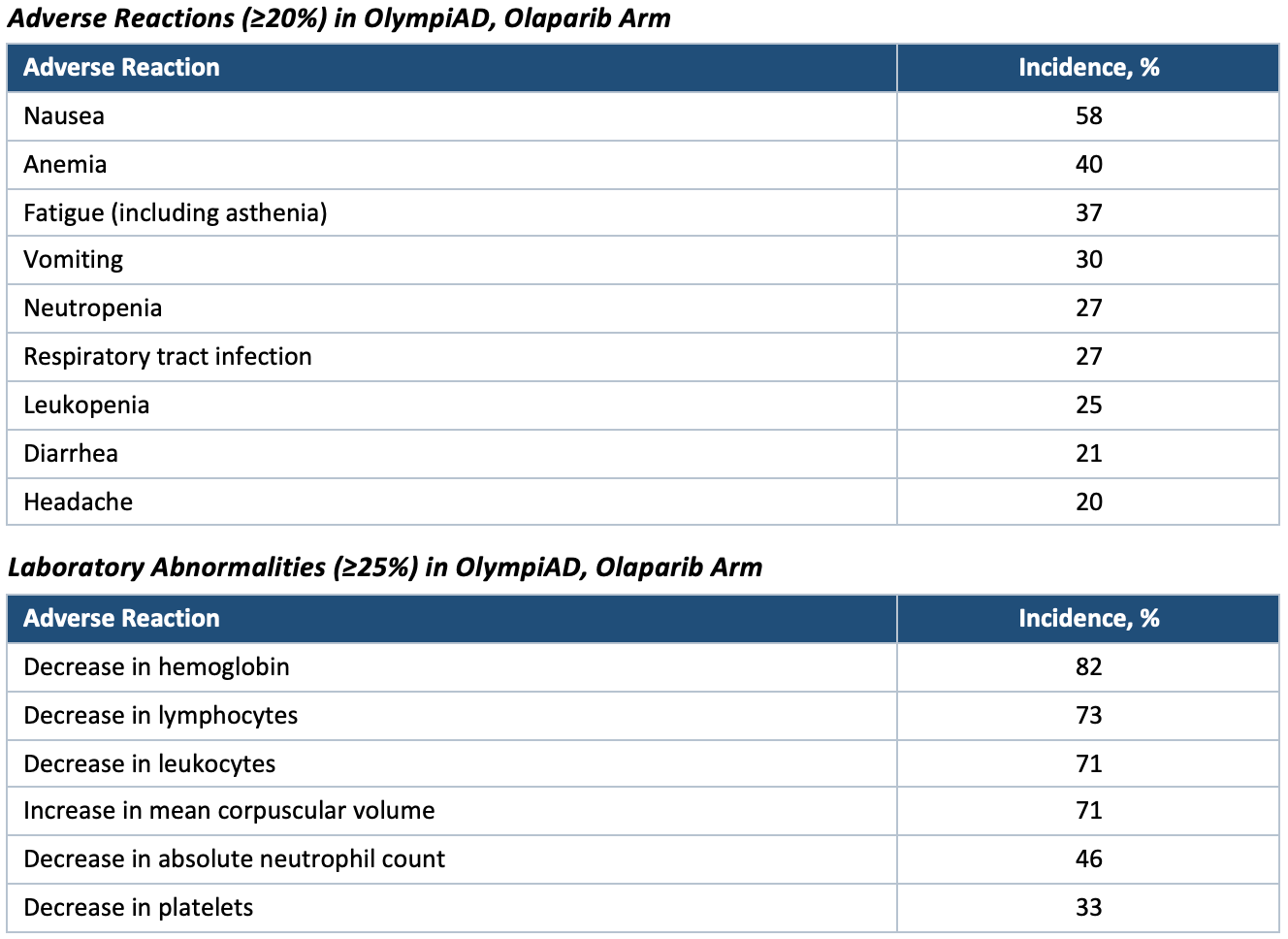
- Adverse reactions occurring in fewer than 20% of patients in OlympiAD included cough (18%), decreased appetite (16%), thrombocytopenia (11%), dysgeusia (9%), lymphopenia (8%), dyspepsia (8%), dizziness (7%), stomatitis (7%), upper abdominal pain (7%), rash (5%), increased serum creatinine (3%), and dermatitis (1%).1
- Adjuvant setting (OlympiA): adverse reactions at 10% or higher were nausea (57%), fatigue including asthenia (42%), anemia (24%), vomiting (23%), headache (20%), diarrhea (18%), leukopenia (17%), neutropenia (16%), decreased appetite (13%), dysgeusia (12%), dizziness (11%), and stomatitis (10%). Laboratory abnormalities at 25% or higher were decreased lymphocytes (77%), increased mean corpuscular volume (67%), decreased hemoglobin (65%), decreased leukocytes (64%), and decreased absolute neutrophil count (39%). Discontinuation occurred in 10% of patients, most often for nausea (2%), anemia (1.8%), and fatigue (1.3%). Do not apply metastatic-setting rates to the adjuvant setting.1
References
1. LYNPARZA (olaparib) tablets. Prescribing information. AstraZeneca Pharmaceuticals LP. Accessed July 2026.
2. Robson M, Im SA, Senkus E, et al. Olaparib for metastatic breast cancer in patients with a germline BRCA mutation (OlympiAD). N Engl J Med. 2017;377(6):523-533. doi:10.1056/NEJMoa1706450
3. US Food and Drug Administration. FDA approves olaparib for germline BRCA-mutated metastatic breast cancer. January 12, 2018. Accessed July 2026.
4. US Food and Drug Administration. FDA approves olaparib for adjuvant treatment of high-risk early breast cancer. March 11, 2022. Accessed July 2026.
5. Robson ME, Tung N, Conte P, et al. OlympiAD final overall survival and tolerability results. Ann Oncol. 2019;30(4):558-566. doi:10.1093/annonc/mdz012
6. Tutt ANJ, Garber JE, Kaufman B, et al. Adjuvant olaparib for patients with BRCA1- or BRCA2-mutated breast cancer (OlympiA). N Engl J Med. 2021;384(25):2394-2405. doi:10.1056/NEJMoa2105215